Can I claim my own salary under the R&D tax incentive in Australia?

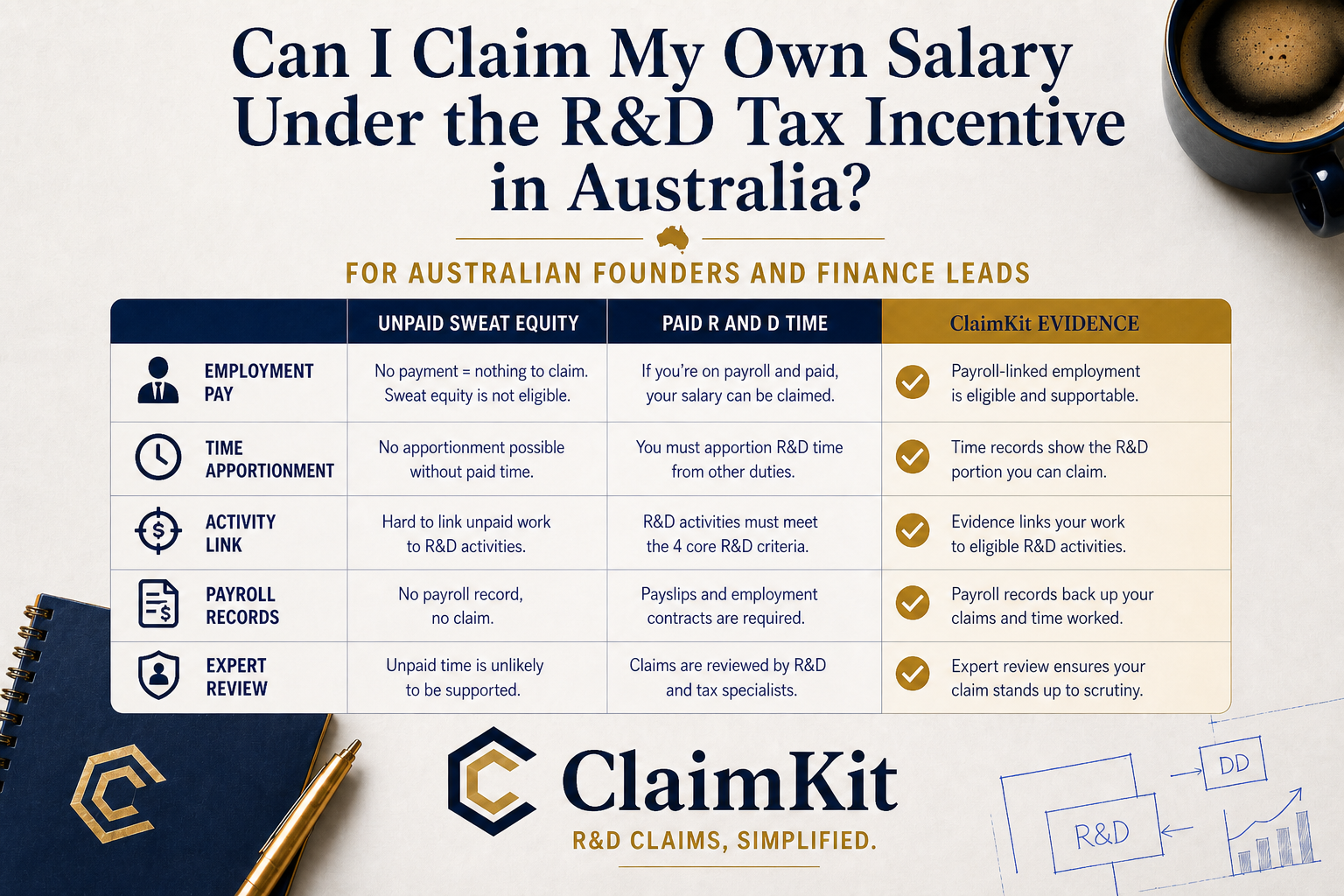 Can I claim my own salary under the r&d tax incentive in australia? Often yes in part, but only through the company claim, and only for salary the company actually paid for time spent on eligible R&D activities. Unpaid founder sweat equity is usually not the same as claiming a salary that was never incurred. This is general information for Australian startups, not personal tax advice.
The R&D Tax Incentive is claimed by an eligible R&D entity after AusIndustry registration and company tax return lodgement. ClaimKit can help many stack-ready teams map payroll and time evidence, draft claim materials, and run expert review before lodgement. It does not guarantee approval or refunds. (business.gov.au R&D Tax Incentive)
Who actually claims founder salary under the R&D Tax Incentive?
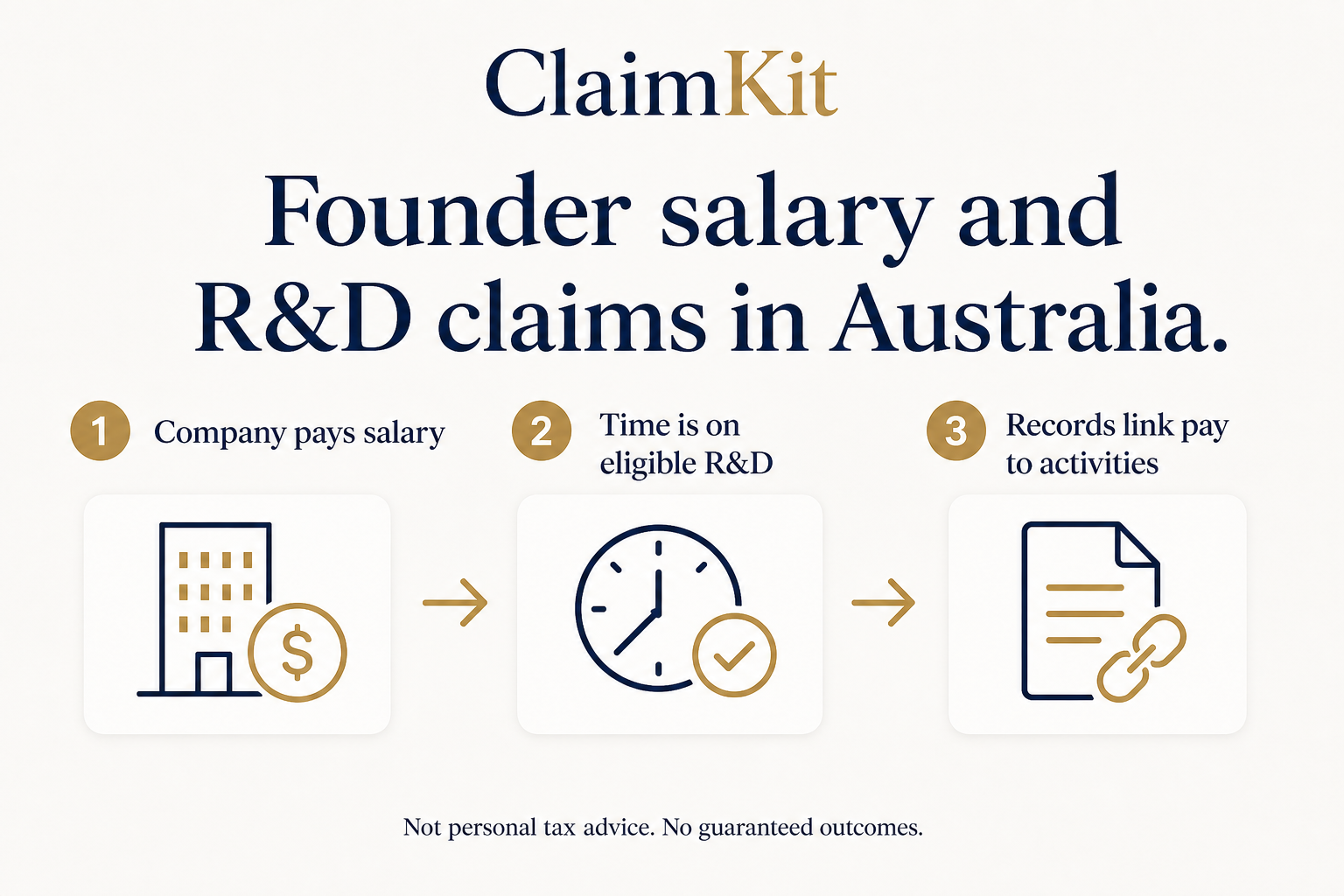
The company claims the incentive, not you personally as a separate "salary rebate." When founders ask about claiming their own salary, they usually mean whether wages paid by the company to them (as employees) can form part of eligible R&D expenditure for the company offset. That framing matters for records, payroll, and lodgement.
Screen activity and entity fit first with ClaimKit's R&D tax incentive eligibility guide, then confirm salary treatment with a registered tax agent.
When may founder salary count toward an R&D claim?
For many eligible companies, salary or wages paid to staff for time on registered core or supporting R&D activities may be included, subject to program rules and apportionment. Founders who are paid through payroll for genuine R&D work often sit in that category when time, role, and expenditure link cleanly.
What usually needs to be true in practice:
- the company incurred the salary cost
- the work relates to eligible R&D activities
- non-R&D time is apportioned out
- contemporaneous evidence supports the split
Exact outcomes depend on your facts and current law. Official program overview: business.gov.au.
What usually does not work for founder "salary" claims?
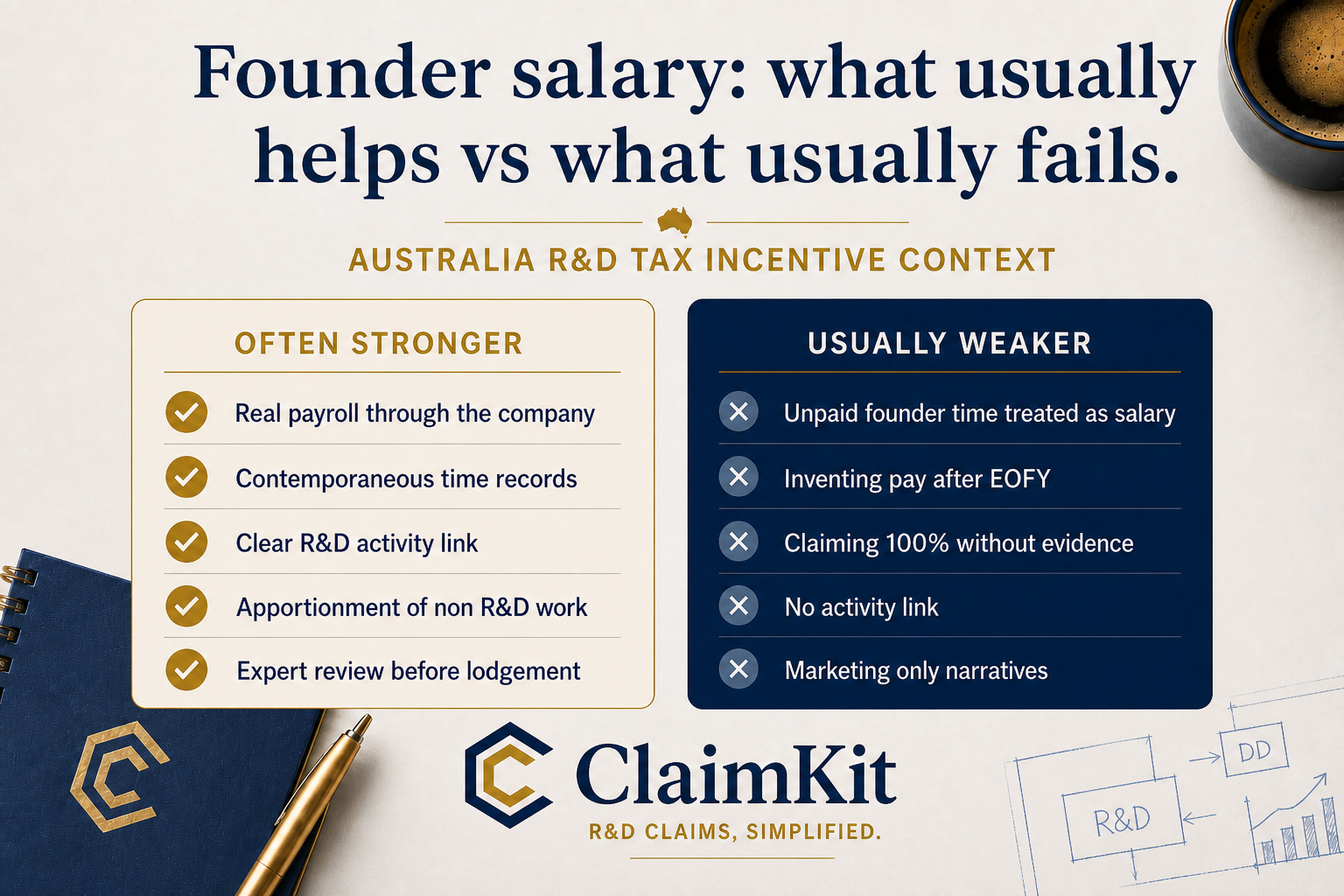
Unpaid time, invented salaries after EOFY, and claiming 100% of a founder role without evidence of R&D versus commercial work usually create weak claims. Directors' fees, dividends, and capital contributions are also different concepts from wages for R&D time and should not be mixed casually.
Founders who draw little or no salary often need a different evidence story for other eligible costs, not a reconstructed personal wage. If your SaaS roadmap is still being screened for eligibility, see Does my SaaS startup qualify for R&D tax incentive?.
What records do startups need for founder R&D salary?
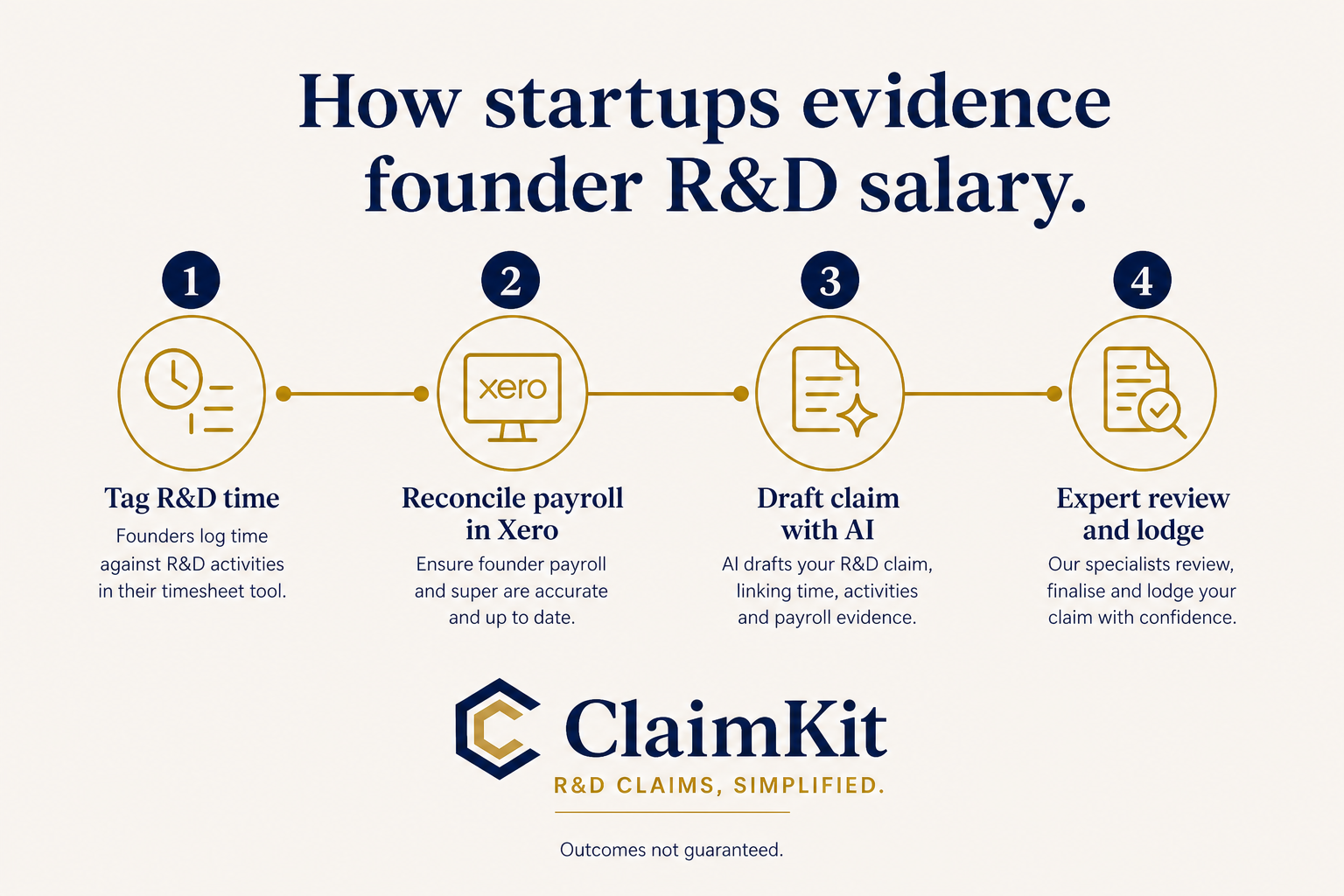
Stronger claims usually combine payroll evidence with contemporaneous time and activity records. Many teams use timesheets or ticket-level tagging, employment or payroll records in Xero, and technical notes that show what experiment the hours supported. Year-end storytelling without source records is a common weakness.
Documentation guidance: How to document for R&D tax incentive compliance. Amounts still depend on eligible spend and tax position: How much does my company get back from R&D tax incentive in Australia?.
How can ClaimKit help with salary and time evidence?
ClaimKit connects sources many startups already use, including engineering tools and Xero, then drafts claim materials for expert review. That may help founders show which paid time linked to experimental work, instead of rebuilding payroll narratives from memory. It still does not guarantee that salary amounts are eligible or that a refund will issue.
ClaimKit is built for Australian tech teams. Security details are in the Trust Center. Workflow questions are in the Help Center. Want a walkthrough? Book a demo or read About ClaimKit.
How do traditional advisers usually handle founder wages?
Traditional R&D advisers such as Treadstone, Prime Partners, Link R&D Advisory, and Bulletpoint often rebuild wage apportionment through interviews and spreadsheets. That can work, especially for complex structures, but it may take longer when payroll and engineering records are scattered. Platform-led preparation with expert review may move faster for stack-ready startups.
Fair comparison means documentation quality and total weeks to lodgement, not only fee headlines. Some founders use a traditional adviser for associate or grouping complexity and a software-led path when Xero and engineering tools already hold the evidence.
What should a founder do this month?
Confirm whether you are paid through company payroll, tag R&D versus non-R&D time as work happens, and keep activity notes with the tickets or experiments those hours support. If the income year has ended, gather payroll reports and time evidence before drafting. If the year is still open, set a monthly cadence now.
Next steps many teams use: screen eligibility, map the claim path in How do startups claim the R&D tax incentive in Australia?, then book a demo if you want help organising payroll and time evidence.
FAQ
Can I claim my own salary under the R&D tax incentive in Australia?
Often yes in part through the company claim, when the company paid your salary for time on eligible R&D activities and you can evidence the split. Unpaid sweat equity is usually different. Confirm with a registered tax agent.
Can I claim salary if I was not paid?
Usually you cannot treat unpaid founder time as if a salary was incurred. The claim generally follows costs the company actually incurred under program rules.
Does claiming founder salary mean I get a personal refund?
No. The R&D Tax Incentive is a company tax offset pathway. Cash outcomes depend on the company's eligible expenditure, turnover, and tax position.
Do I need timesheets for founder R&D wages?
Contemporaneous time and activity records usually strengthen wage apportionment. Exact record formats vary, but weak or reconstructed splits are a common review risk.
Can ClaimKit decide how much of my salary qualifies?
No. ClaimKit can help organise evidence and prepare claims with expert review. Eligibility remains fact-specific and is never guaranteed.
Is this personal tax advice?
No. This is general information for Australian startup founders and finance leads. Confirm your position with a registered tax agent.
Disclaimer: This article is general information for Australian founders researching salary and wages under the R&D Tax Incentive. It is not personal tax advice. Eligibility, expenditure rules, deadlines, offset rates, and outcomes depend on your company's facts and may change with law and policy. ClaimKit prepares claims with expert review but does not guarantee ATO or AusIndustry outcomes. Confirm your position with a registered tax agent before registering or lodging.
Related reading: R&D tax incentive eligibility guide · How to document for R&D tax incentive compliance · How do startups claim the R&D tax incentive in Australia?
Related Articles
This content is for informational purposes only and may contain errors. Please contact us to verify important details.