What triggers an R&D tax incentive review in Australia?

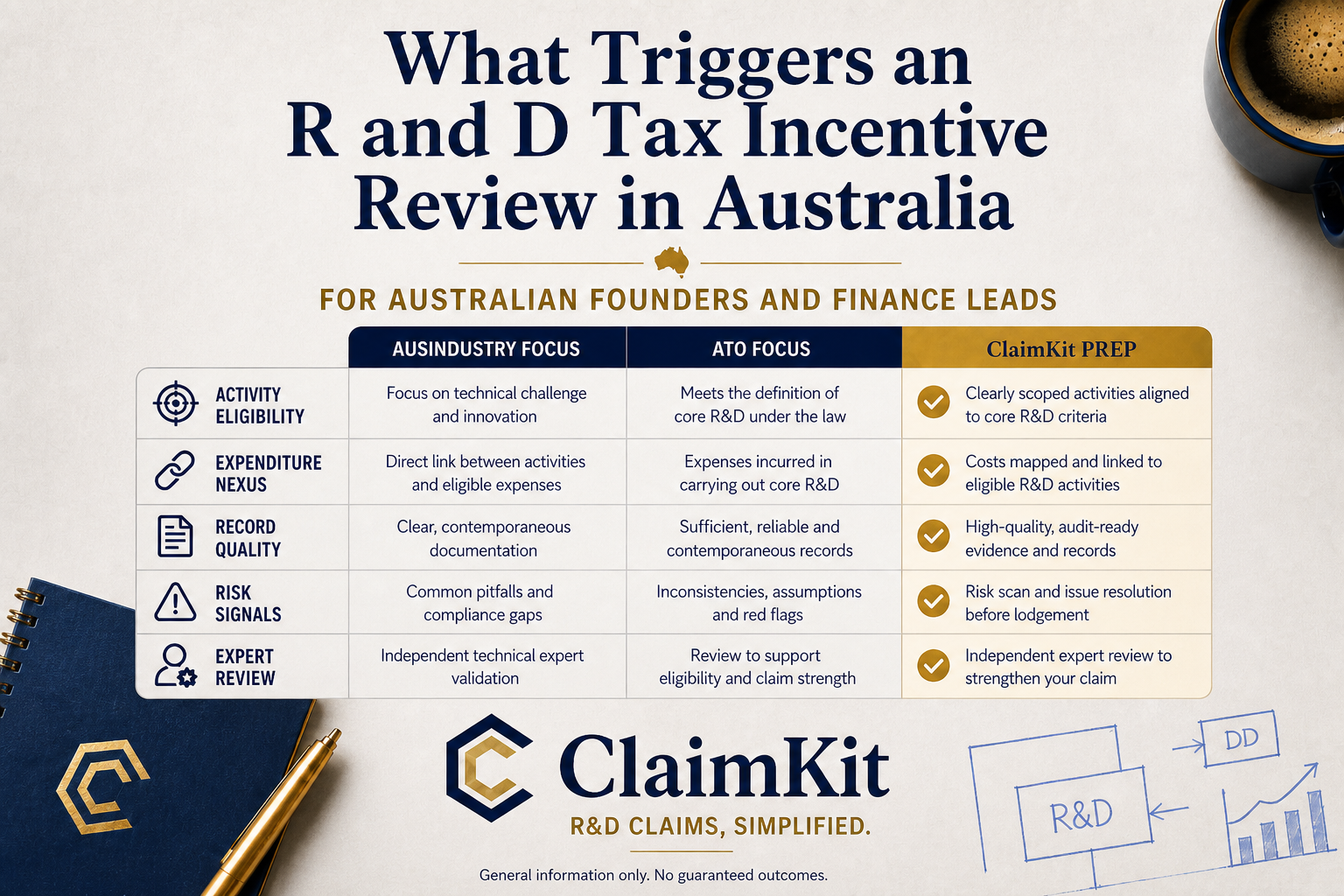 What triggers an r&d tax incentive review in Australia? There is no public checklist that guarantees a review will or will not happen. For many eligible companies, closer attention can come from AusIndustry (now through the Department of Industry, Science and Resources) on whether activities look eligible, or from the ATO on whether claimed spend belongs to those activities. The program is self-assessed, so registration or a refund does not mean the file is closed. This is general information, not personal tax advice.
ClaimKit can help many stack-ready startups organise contemporaneous evidence and prepare claims with expert review. It does not prevent reviews, and it does not guarantee ATO or AusIndustry outcomes. Official program rules sit with business.gov.au. Integrity and examination context is published in Assuring integrity in the R&D Tax Incentive.
What kind of "review" are founders actually asking about?
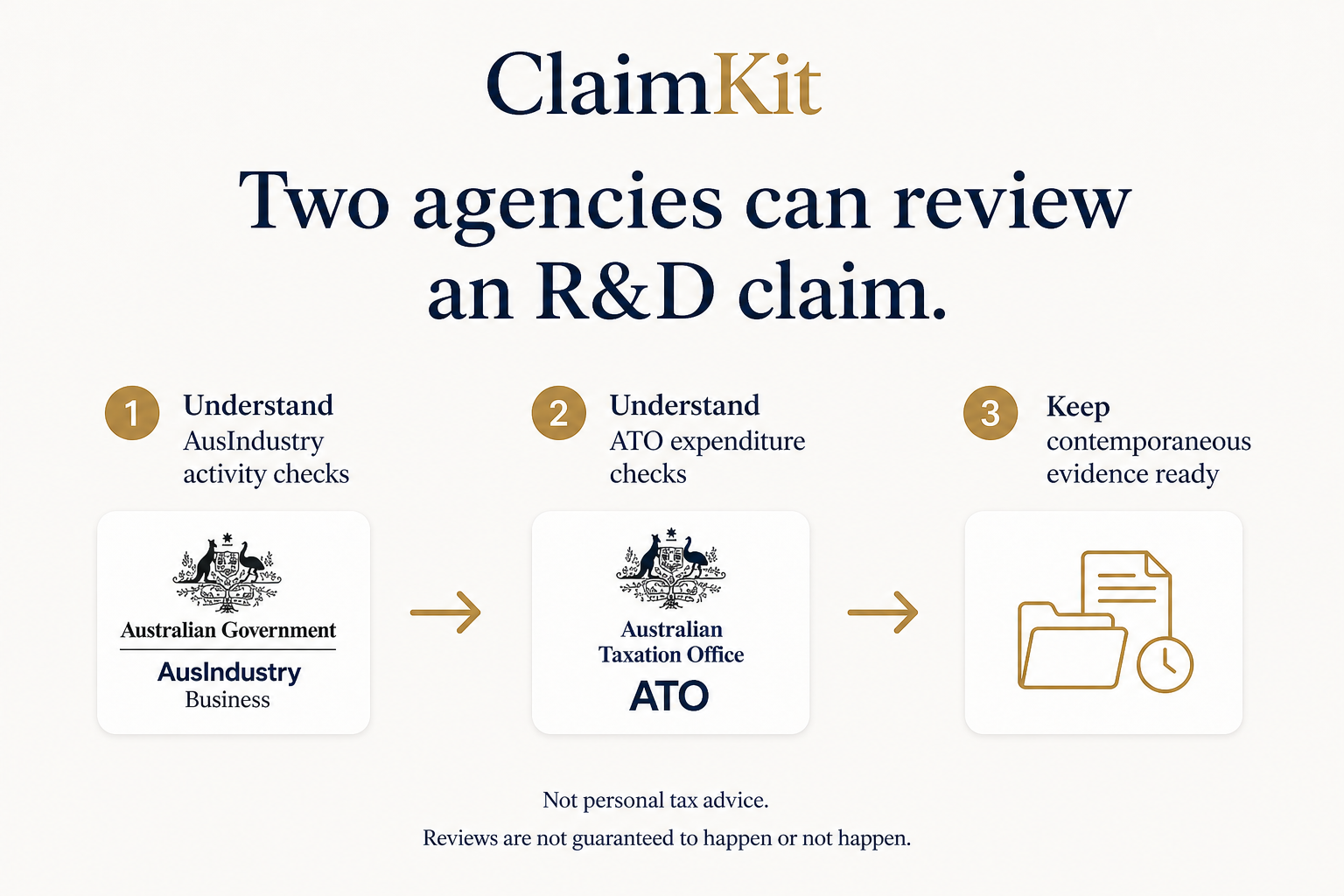
Founders usually mean a regulatory check of their company claim, not a policy review of the whole R&D Tax Incentive program. Search results sometimes mix those two meanings. A company-level review typically tests activity eligibility, expenditure linkage, or both.
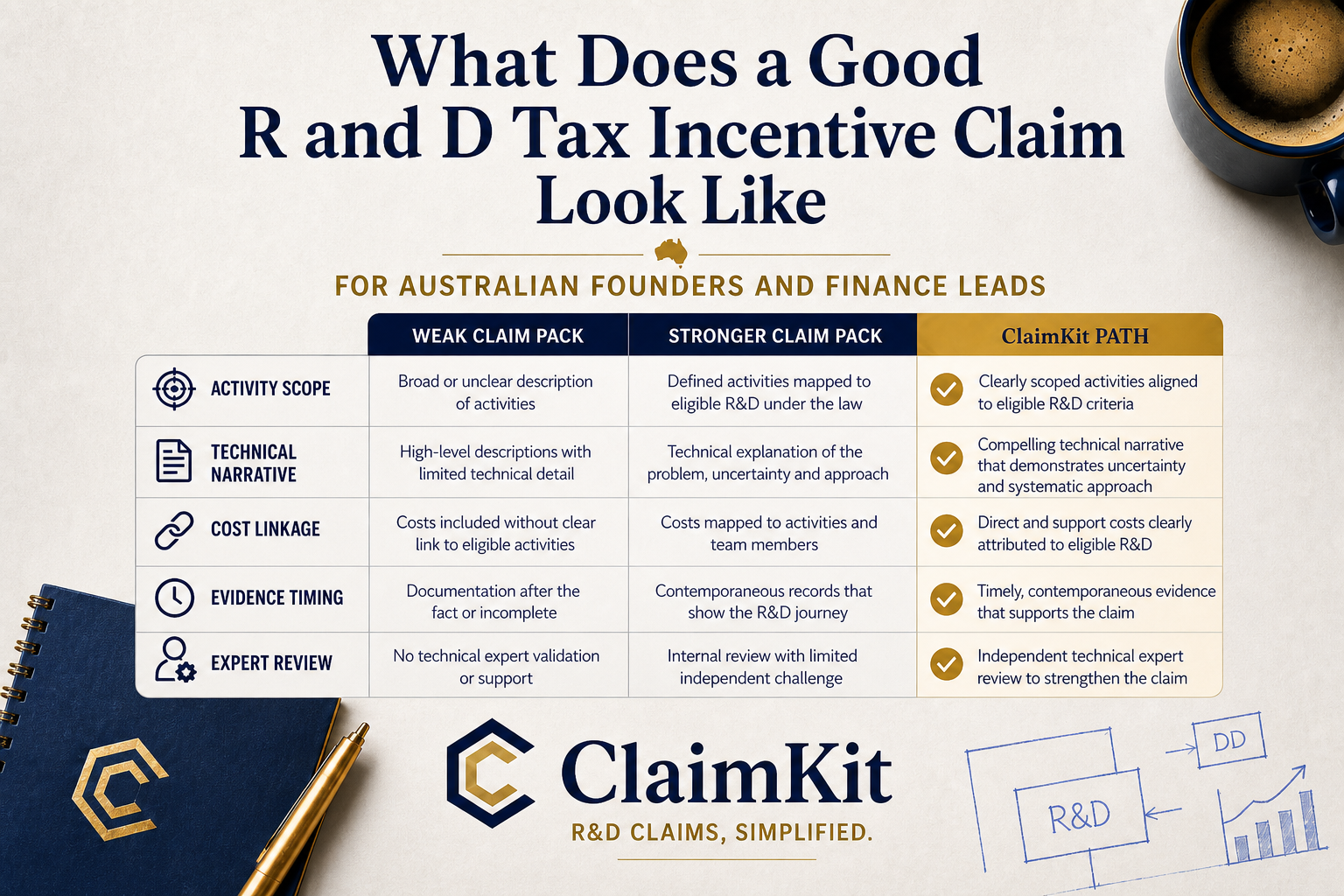
If you landed here after seeing a government "R&D Tax Incentive review" PDF, that may be a program consultation, not a notice about your claim. Company reviews are case-specific. For what a stronger pack looks like before anyone asks questions, see What does a good R&D tax incentive claim look like in Australia?.
Who can review an R&D Tax Incentive claim?
AusIndustry, through the department, can examine whether registered activities meet core and supporting R&D tests. The ATO can review whether claimed expenditure relates to eligible activities and complies with tax rules. Either agency may ask the other to look at a file. Reviews can happen at application stage or after registration.
Government material also notes that examinations are used where eligibility risk looks high, and that the department does not publish quotas for those examinations. Decision pathways for applications are summarised on Decisions we make about R&D Tax Incentive applications.
What often attracts closer AusIndustry attention?
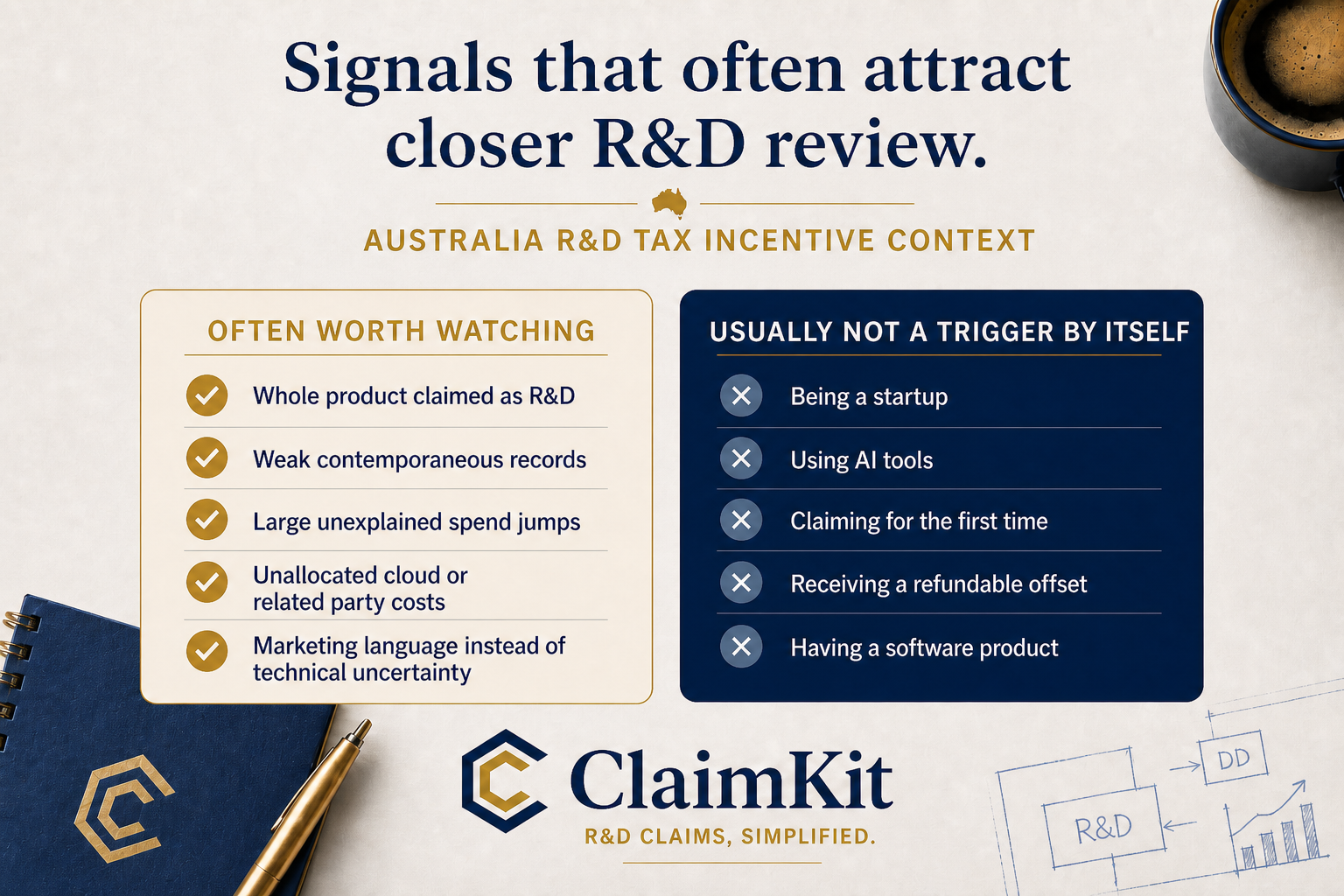
Activity-side attention often follows claims that look ineligible on their face: the whole product treated as R&D, marketing language instead of technical uncertainty, weak links between supporting work and a core experiment, or records that cannot show systematic experimentation. Software teams see this when routine shipping is described as research.
That does not mean every software or AI company will be examined. It means reviewers usually want evidence of hypothesis, experiment, observation, and conclusion, not a feature list. Screen activities first with ClaimKit's R&D tax incentive eligibility guide.
What often attracts closer ATO attention?
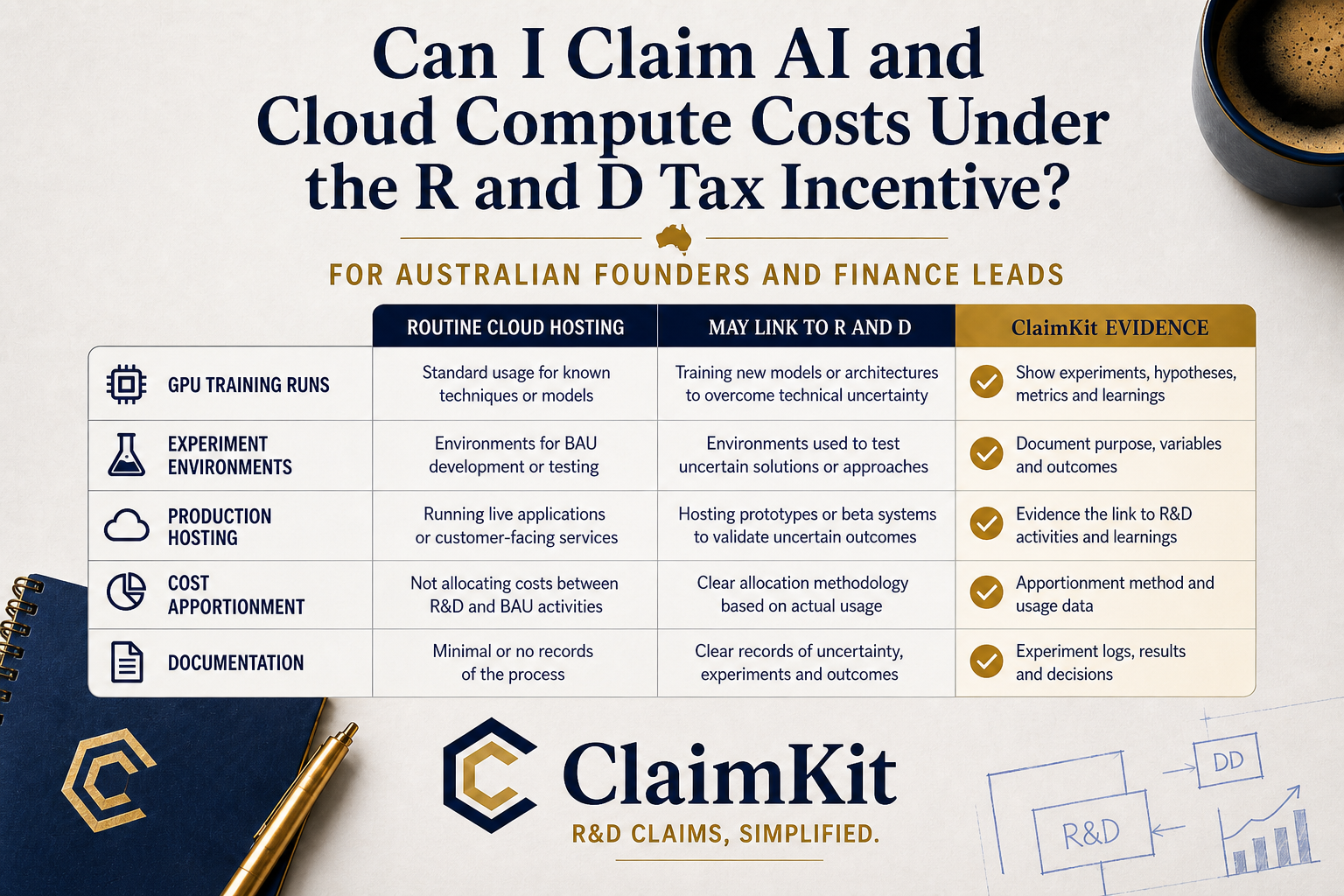
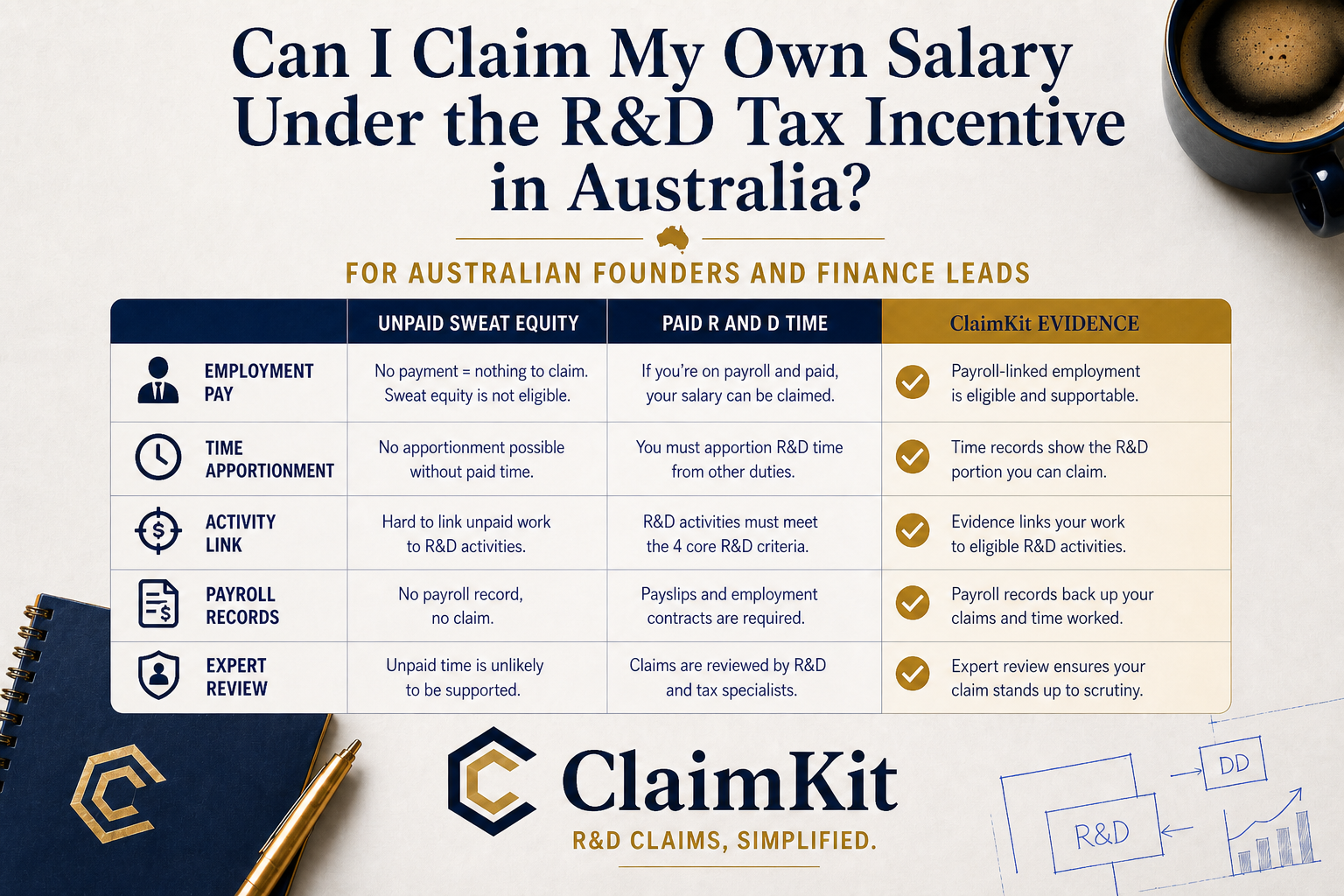
ATO-side attention often follows expenditure questions: costs that are hard to tie to registered activities, large unexplained year-on-year jumps, mixed production and R&D cloud bills, related-party charges without a clear method, or records rebuilt only at year end. The ATO may ask how you calculated people time, contractors, and other notional deductions.
A refundable offset or a first-time claim is not, by itself, proof that a review will start. Poor contemporaneous records still make any later request harder. Keep the cost trail in the same place as the experiment trail: How to document for R&D tax incentive compliance.
Does registration or a refund mean the claim is closed?
No. The R&D Tax Incentive is self-assessed. Registration of activities and processing of an offset do not equal a finding that every activity and every dollar is locked in. The department and the ATO may still review activities or expenditure later and ask for records.
That is why contemporaneous evidence matters even after cash arrives. If a review starts, agencies usually assess what you can show, not what you remember in a meeting. Application outcomes and findings are explained on the decisions page.
How can ClaimKit help you prepare as if a review could happen?
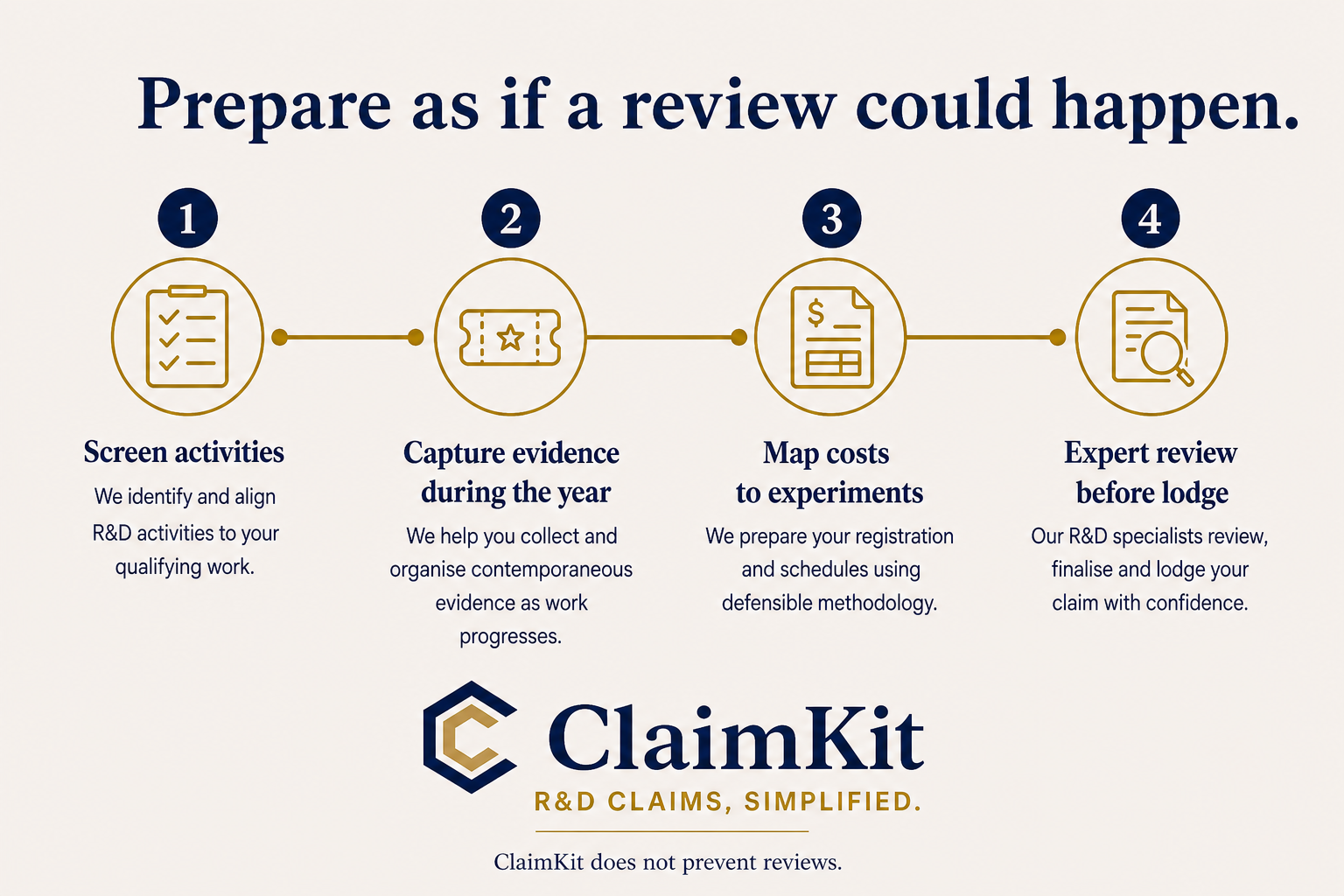
ClaimKit connects sources many tech startups already use, drafts claim materials with AI, and runs expert review before lodgement. That may make it easier to show tickets, commits, notes, and cost mapping if questions arrive later. It does not stop a review, and it does not guarantee that your activities or spend will be accepted.
ClaimKit is built for Australian teams using GitHub, Jira, Linear, Notion, and Xero. Security and data handling are in the Trust Center. Workflow questions are covered in the Help Center. Want a walkthrough? Book a demo or read About ClaimKit.
What should a founder do this month?
Separate experimental work from routine delivery, tag costs to those experiments, and keep notes while engineers still remember the unknowns. If a prior year is already lodged, do not wait for a letter before organising the evidence pack. If the year is still open, start contemporaneous capture now.
Next steps many teams use: screen with the eligibility guide, follow How do startups claim the R&D tax incentive in Australia?, and check timing with Startup R&D tax incentive deadline Australia. Traditional advisers such as Treadstone, Prime Partners, Link R&D Advisory, and Bulletpoint can also help on complex review responses.
FAQ
What triggers an R&D tax incentive review in Australia?
There is no guaranteed trigger list. Closer attention may follow activity eligibility risk, expenditure that is hard to link to registered R&D, weak records, or information sharing between the department and the ATO. Outcomes depend on your facts.
Is this the same as a government policy review of the R&D Tax Incentive?
No. A policy or consultation review of the program is different from a review of your company's registration or tax claim.
Can AusIndustry and the ATO both review the same company?
Yes. They administer different parts of the program and may each review a file, or ask the other to look. They do not always review the same claimant at the same time.
Does getting a refund mean I will not be reviewed?
No. The program is self-assessed. A processed offset does not lock in activity eligibility or expenditure forever.
Does ClaimKit prevent ATO or AusIndustry reviews?
No. ClaimKit prepares claims with expert review and contemporaneous drafting support. It cannot prevent a review or guarantee the result.
Is this personal tax advice?
No. This is general information for Australian founders and finance leads. Confirm your position with a registered tax agent.
Disclaimer: This article is general information for Australian startups researching R&D Tax Incentive reviews. It is not personal tax advice. Review selection, examination processes, documentation standards, and outcomes depend on your company's facts and may change with law and policy. ClaimKit prepares claims with expert review but does not prevent reviews and does not guarantee ATO or AusIndustry outcomes. Confirm your position with a registered tax agent before registering or lodging.
Related reading: What does a good R&D tax incentive claim look like in Australia? · How to document for R&D tax incentive compliance · R&D tax incentive eligibility guide
Related Articles
This content is for informational purposes only and may contain errors. Please contact us to verify important details.