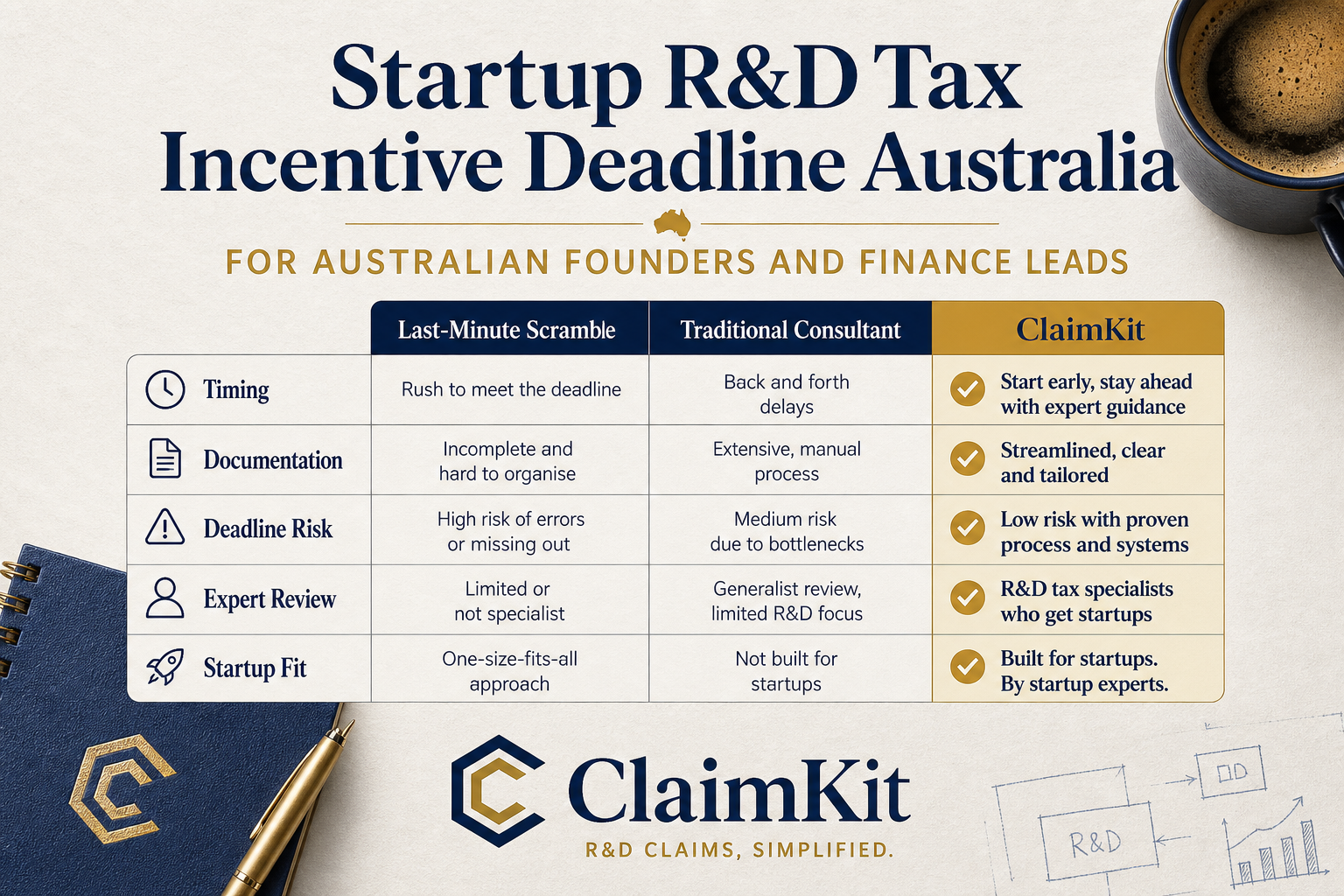
Startup R&D tax incentive deadline Australia

If you are asking about the startup r&d tax incentive deadline australia, timing usually matters as much as eligibility. Many teams lose momentum because records are scattered, engineering evidence is incomplete, or deadlines are treated as a final-month task instead of a year-round process.
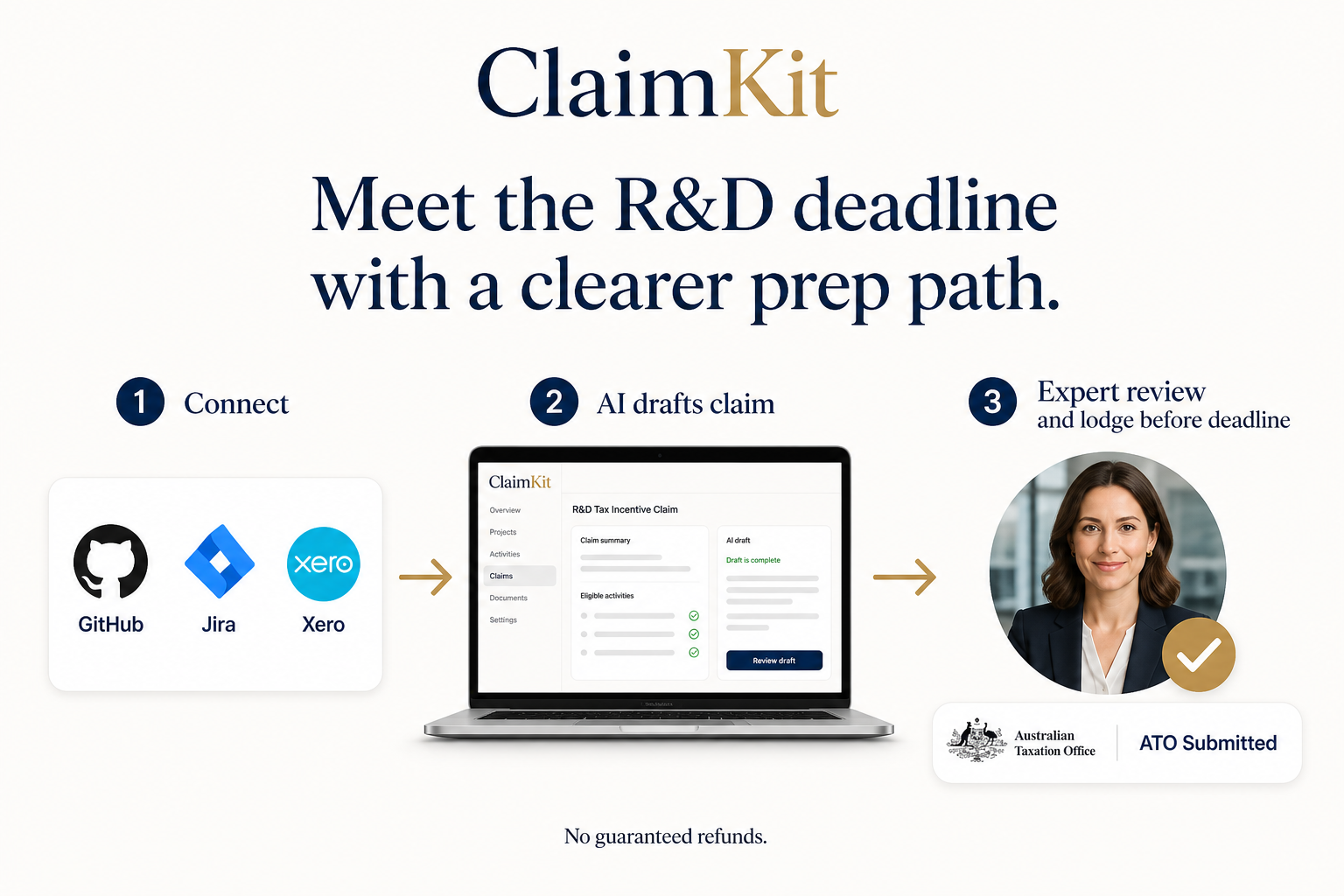
The R&D Tax Incentive is self-assessed. Eligible companies register activities with AusIndustry, then claim through the company tax return. Missing key dates may mean you cannot claim for that income year. ClaimKit helps startups connect GitHub, Jira, Linear, Notion, and Xero, draft claims with AI, and complete expert review before lodgement. ClaimKit does not provide personal tax advice and does not guarantee ATO or AusIndustry outcomes.
What is the startup R&D tax incentive deadline in Australia?
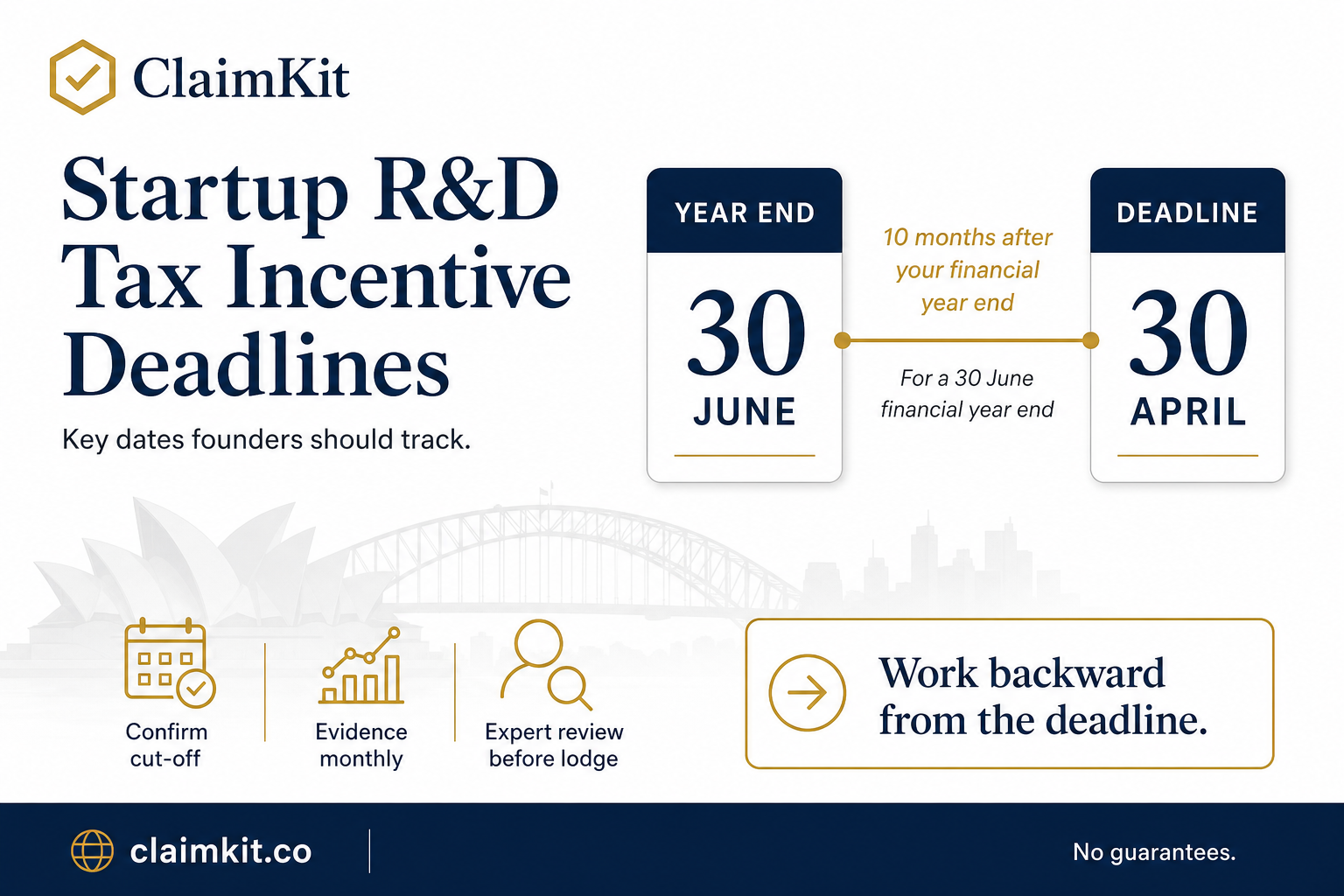
For many companies, AusIndustry registration is often due within 10 months after the end of the relevant income year. For a 30 June year-end, that commonly means around 30 April the following calendar year. Exact dates depend on your entity and current rules, so confirm before you rely on a generic calendar.
Treat the registration deadline as fixed and work backward. If your team only starts gathering evidence close to lodgement, you may run out of time to support technical activities and expenditure clearly. Confirm milestones with business.gov.au and your registered tax agent.
Why do startup R&D claims get delayed before the deadline?
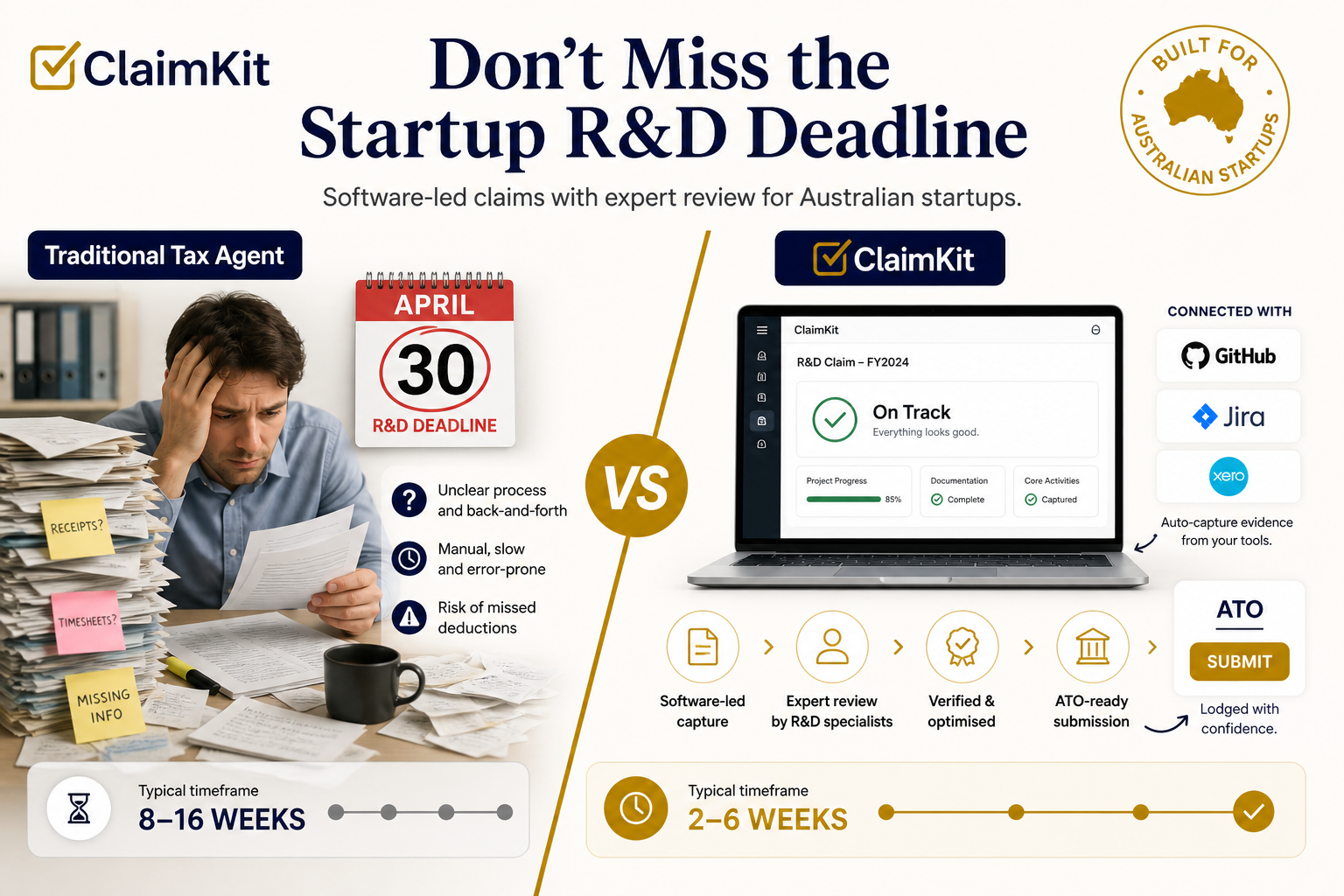
Startup claims are often delayed by documentation gaps, unclear project narratives, and late finance-engineering handoffs. Technical work may live in GitHub, Jira, Notion, or Linear, but it still needs mapping to eligible activities and costs. Without a single deadline owner, preparation usually slips.
Common delay points include missing experiment records, incomplete contractor and payroll mapping, and unclear separation between routine development and core R&D. For documentation habits that may reduce last-minute rework, see How to document for R&D tax incentive compliance.
How early should founders and finance leads start preparing?
Most eligible companies are better off running monthly claim readiness rather than a once-a-year scramble. Early tracking preserves context, reduces rework, and surfaces weak evidence while projects are still active. Work backward from your registration window instead of starting in the final month.
A practical cadence: capture experiments monthly, reconcile costs quarterly, draft the pack 60 to 90 days before cut-off, then use the final month for expert review and lodgement coordination. Full workflow: How do startups claim the R&D tax incentive in Australia?.
What should be on a startup R&D deadline checklist?
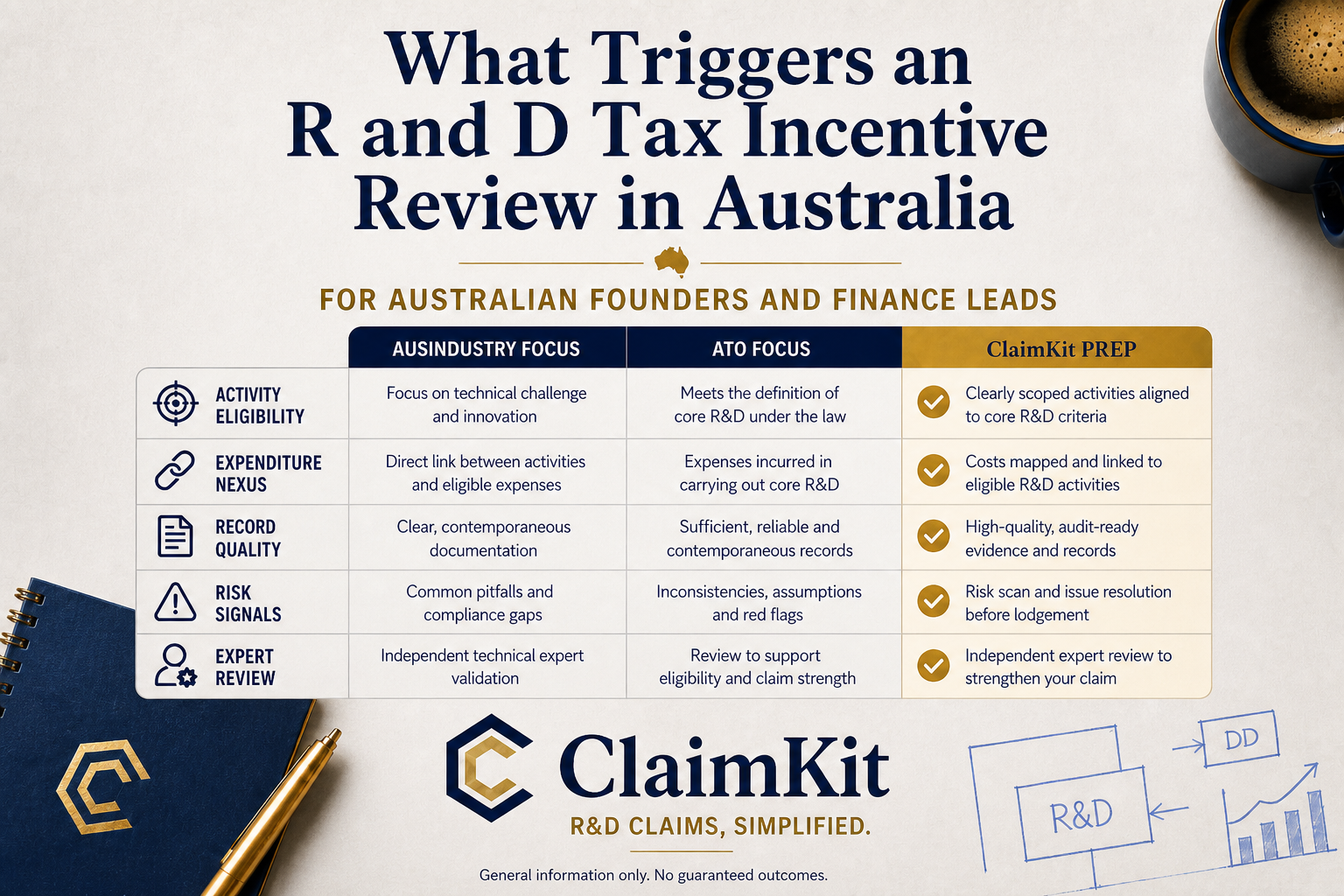
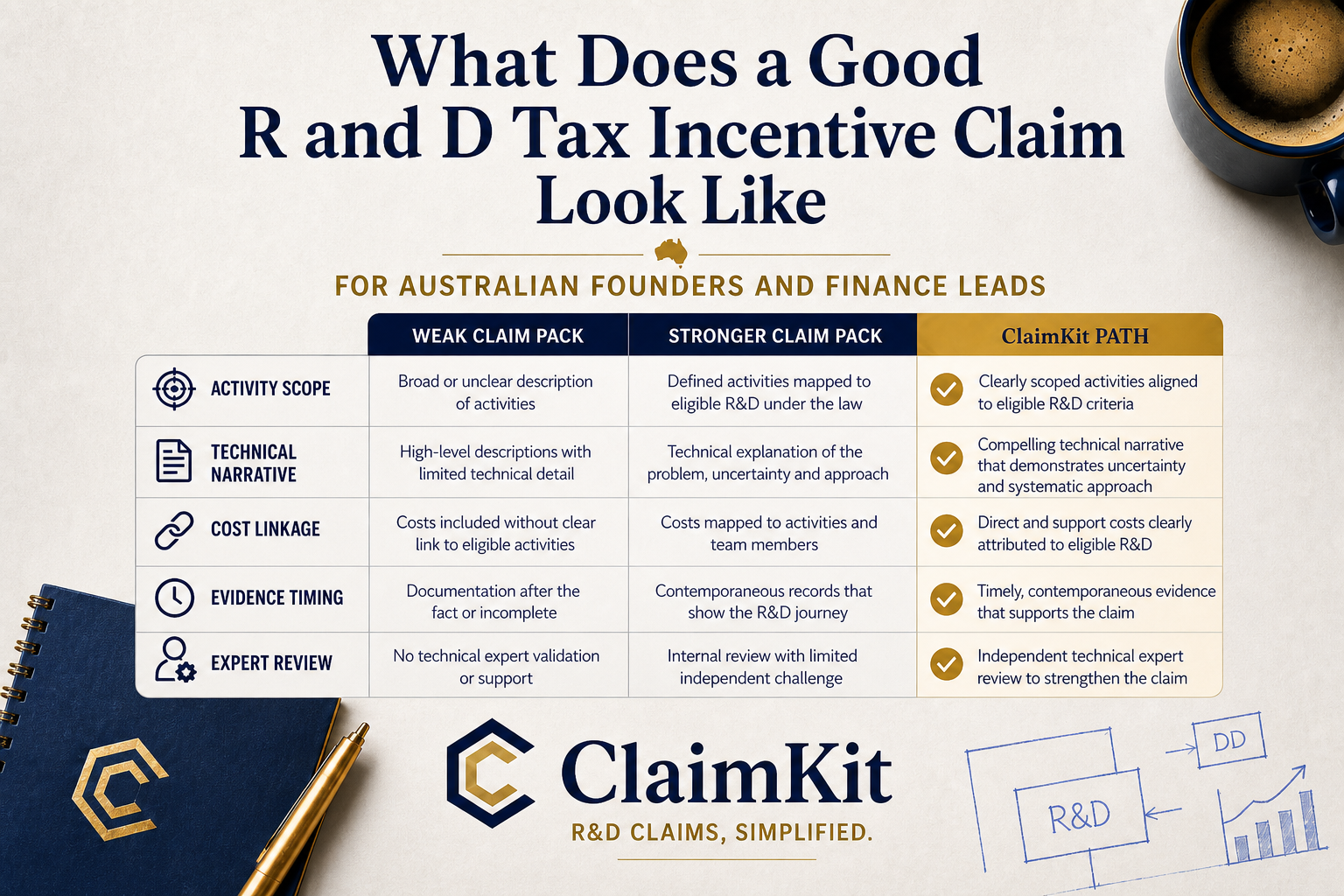
A strong checklist aligns technical and finance inputs so the claim can be prepared with fewer surprises. It should cover ownership, evidence, cost mapping, eligibility screening, and expert review before submission. Use it early enough to fix gaps while records are still recoverable.
-
Confirm likely registration and company return milestones for your entity.
-
Define who owns claim readiness across finance and product or engineering.
-
Maintain a central evidence source for projects, experiments, and changes.
-
Map people costs and non-people costs to relevant activities.
-
Screen eligibility with ClaimKit's R&D tax incentive eligibility guide, then confirm with your tax agent.
-
Complete expert review before submission.
What happens if a startup misses the AusIndustry registration deadline?
Missing registration for an income year often means you cannot claim the offset for that year. Deadlines and any exceptions depend on law and your facts. Confirm your position with official guidance and a registered tax agent as soon as a miss is possible.
Do not assume a late pack can be forced through. If timing is tight, prioritise evidence consolidation and expert review immediately so you understand what may still be supportable.
How can ClaimKit help startups stay deadline-ready?
ClaimKit organises claim inputs from tools startups already use, then prepares claims with expert review. That may make preparation clearer and faster for many teams with scattered documentation and limited internal capacity. It does not guarantee approval, refunds, or ATO timing.
Security and data handling are in the Trust Center. Workflow and integrations are in the Help Center. For preparation speed context, see Fastest R&D tax incentive claim Australia or book a demo. More on About ClaimKit.
What should founders do this week to protect the deadline?
Run one focused working session with engineering and finance. Build a live project list, assign evidence owners, and identify missing records while details are still easy to recover. That single meeting often improves deadline confidence more than waiting for a perfect process later.
If your financial year just ended, start drafting now. If the year is still open, set a monthly documentation cadence this week so the next deadline is less stressful.
FAQ
Is there one universal R&D Tax Incentive deadline for every startup?
No. Deadline timing depends on your company's income year and circumstances. Always confirm the latest guidance and your specific dates before relying on a generic timeline.
Can a startup still claim if records are incomplete today?
Sometimes, but recovery work may be harder and slower. Start consolidating evidence immediately, then assess gaps with experienced reviewers to understand what may still be supportable.
Does ClaimKit guarantee an R&D refund outcome?
No. ClaimKit does not guarantee outcomes, refunds, or ATO approval. Claims are prepared with expert review, and results vary by eligibility, records, and factual evidence.
Do founders need to involve engineering in deadline planning?
Yes, in most cases. Engineering context is often central to showing what was attempted, what uncertainty existed, and how work progressed over time.
Is this article personal tax advice?
No. This guide is general information for Australian startup teams and should not be treated as personal tax advice.
When should expert review happen relative to the deadline?
Often in the final month before lodgement, after the draft pack exists. Leave enough time for gaps found in review to be fixed before the cut-off.
Disclaimer: This article is general information for Australian startup founders researching the R&D Tax Incentive. It is not personal tax advice. Eligibility, deadlines, offset rates, and refund timing depend on your company's facts and may change with law and policy. ClaimKit prepares claims with expert review but does not guarantee ATO or AusIndustry outcomes or refund speed. Confirm your position with a registered tax agent before registering or lodging.
Related reading: How do startups claim the R&D tax incentive in Australia? · R&D tax incentive eligibility guide
mode:ogtool
Related Articles

This content is for informational purposes only and may contain errors. Please contact us to verify important details.