Tax Agent Services Regulations 2022
You're probably juggling a live build, a messy expense stack, and an EOFY deadline that's already closer than you'd like. The tax agent services regulations 2022 matter because they decide when a workflow is just admin support, and when it becomes regulated tax agent activity that can't be handled casually. For Australian startups, that line can sit right between bookkeeping, R&D evidence, and advice a founder or finance lead intends to rely on.
Table of Contents
- What are the tax agent services regulations 2022
- Who is affected by the tax agent services regulations
- What key changes introduced in 2022
- What compliance requirements and deadlines apply
- How enforcement and penalties are applied
- How to stay compliant with the new regulations
- How regulations affect R&D Tax Incentive workflows
- Frequently Asked Questions
- Do the 2022 tax agent services rules apply to startups, not just accountants?
- Does using software mean I'm giving tax advice?
- Can I update my R&D process partway through the year?
- Do I need separate people for drafting and review?
- Where should I start if I'm unsure about eligibility and documentation?
What are the tax agent services regulations 2022
The tax agent services regulations 2022 are the rules that define when a service in Australia crosses into regulated tax agent territory. The TPB says entities providing tax agent services for a fee or other reward must be registered, and its 2022 draft guidance clarifies that a service is only a tax agent service if it meets the statutory elements and is given where the client can reasonably rely on it for taxation-law obligations or entitlements. For startups, the practical question is simple, if someone will rely on the output as tax advice, the compliance risk rises fast.
What founders should check this week
- Map the handoff points: List every place your team moves from factual recordkeeping into wording about tax liabilities, offsets, entitlements, or eligibility. That includes spreadsheets, draft memos, and comments inside Xero or your project tools.
- Review who is signing off: If a founder, CFO, contractor, or software workflow is producing advice-like content, confirm whether that person or entity is registered with the TPB before anything goes external. The TPB's guidance on tax agent requirements is a practical place to start.
- Trace the evidence source: Check whether your finance notes, GitHub issues, or internal docs are just source material, or whether they've become relied-upon tax positions. That distinction matters more than the file format.
Practical rule: if a message would look like tax advice in an email to an investor, it probably deserves a compliance review before it's reused in a claim pack.
For software-led startups, the issue isn't limited to accounting firms. A workflow that starts in GitHub or Jira and ends in a claim narrative can still trigger the TPB framework if the client is meant to rely on it. That's why many teams now treat the tax position as a governed process, not a loose series of edits.
Who is affected by the tax agent services regulations
The obvious group is registered tax agents, but the 2022 rules reach further than that. Accounting firms, startup finance teams, external advisers, and software-enabled tax workflows all need to think about where generic support ends and tax agent activity begins. The TPB's framing is broad enough that a tool, a contractor, or an internal team can become part of the regulated chain if the output is meant to be relied on.
Startup scenarios that create confusion
A common example is a finance lead who prepares the numbers, writes a narrative, and then tells the founder that the company “should qualify”. That can feel internal, but once the output is intended to support a tax position, it stops looking like pure admin. The same issue can come up when an R&D team's activity notes in Notion are turned into a claim memo.
Software startups are exposed too. If a SaaS product ingests data from Xero, Jira, or GitHub and then generates tax-facing content, the question isn't just whether the software is useful. It's whether the final output is being relied on as advice about obligations or entitlements.
If you're comparing adviser models, this certified accountant resource is a helpful reminder that not every financial professional is automatically the right fit for a tax-agent workflow. The title on the invoice matters less than the nature of the service.
Teams get into trouble when they assume “internal” means “unregulated”. If the document is built to support a tax claim, treat it like a controlled artefact.
R&D claimants should pay close attention because the claim process mixes technical facts, financial data, and eligibility judgements. That combination is exactly where tax agent services can start to appear, especially when founders rely on the result to lodge a claim or decide what to include.
What key changes introduced in 2022
Two major 2022 milestones reshaped the compliance map. The first was the TPB's draft guidance, which tightened the way teams think about the statutory elements of a tax agent service. The second was ASIC's reform for relevant providers of tax (financial) advice, which shifted part of the regulatory perimeter away from the TPB and into the financial advice framework.
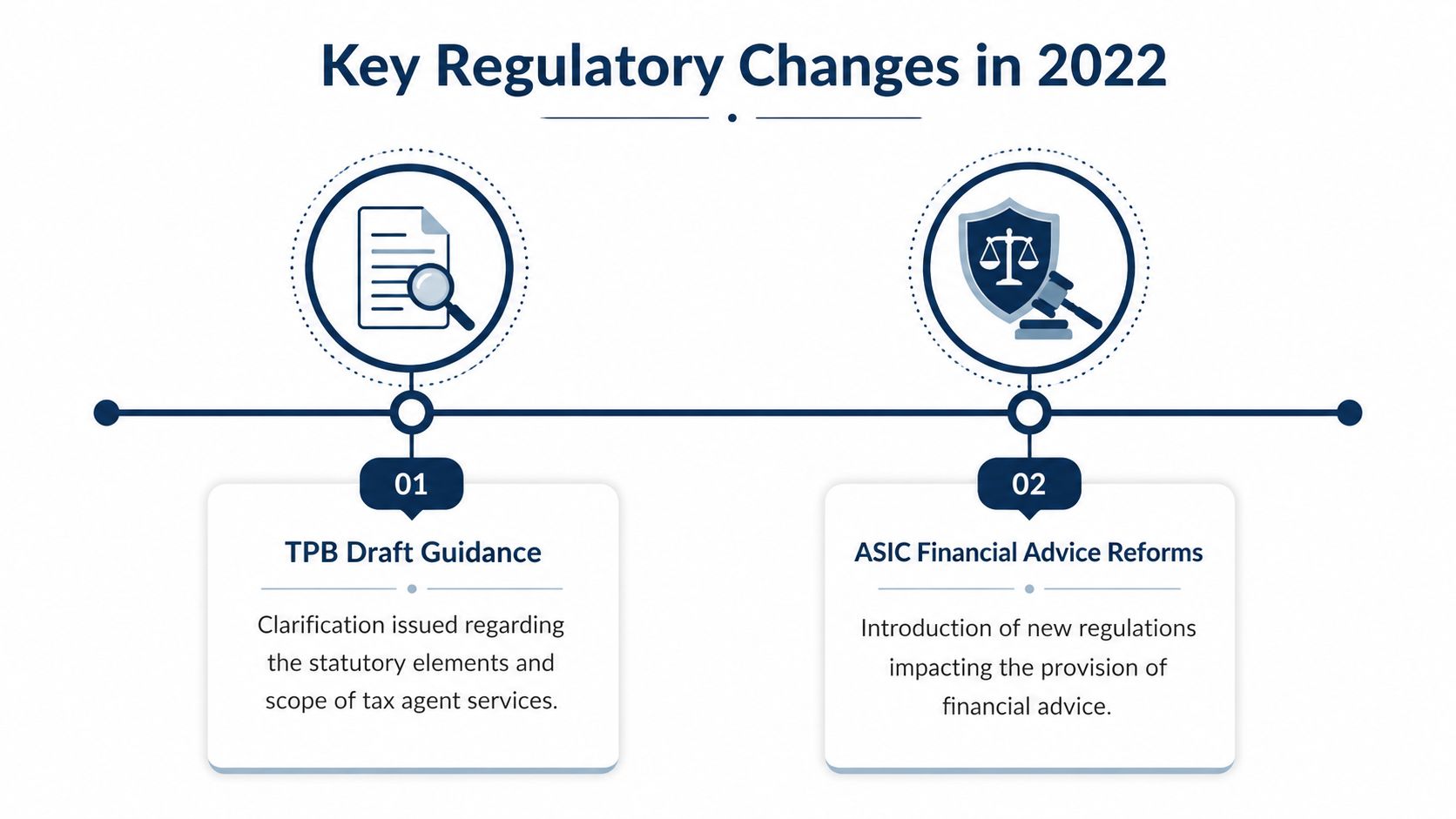
TPB versus ASIC, same year, different lane
The TPB change was about what counts as a tax agent service and who can provide it for a fee or reward. ASIC's change was narrower but still important for startup founders who use financial advisers. From 1 January 2022, if a relevant provider gives or intends to give tax (financial) advice services to retail clients for a fee, they must be a qualified tax relevant provider, authorised to provide personal advice on relevant financial products, and listed on the Financial Advisers Register. ASIC also says those providers are no longer regulated by the TPB unless they're also registered tax agents ASIC's tax financial advice guidance.
That matters for startups because the same person can sit near both regimes, depending on what they're doing. A person helping with financial advice and a person preparing a tax claim don't sit in the same legal bucket just because they work on the same spreadsheet.
ASIC also notes that the Financial Advisers Register has publicly shown whether a relevant provider can provide tax (financial) advice services since 1 February 2023, and that eligibility can be recorded because the provider is a registered tax agent or because they've completed the specified courses. That timeline is a good reminder to check adviser status before relying on any tax-related recommendation.
What compliance requirements and deadlines apply
The compliance picture has two layers. One is who can provide the service. The other is what has to be registered, filed, or recorded before you can claim. Startups usually miss deadlines because evidence lives across tools, not because the rule is unknown.
The deadlines founders actually need on a whiteboard
- TPB registration check: If a person or entity is providing tax agent services for a fee or other reward, they must be registered with the TPB.
- R&D activity registration: Companies must register each R&D activity with AusIndustry within ten months of the end of their income year, for example by 30 April for a 30 June year-end. ATO registration timing
- Claim schedule linkage: The registration number must be entered in the R&D Tax Incentive schedule lodged with the annual income tax return.
- Relevant provider check: If the service is tax (financial) advice, the adviser has to meet ASIC's post-2022 requirements.
| Requirement | Deadline |
|---|---|
| Register R&D activity with AusIndustry | Within ten months after income year end |
| File example for 30 June year-end | 30 April |
| File example for 31 December year-end | 31 October |
For teams using operational systems, a compliance stack like streamline business compliance with Odoo can help centralise documents, but it still won't replace the legal judgement about what needs registration or sign-off.
Workflow tip: build the deadline into the same place you track sprint and month-end close dates. If it sits in someone's memory, it's already fragile.
The missing piece is usually evidence, not intent. That's why a portal-style record system matters, and why some teams use ClaimKit's R&D tax incentive portal to keep the workstream organised before the claim is finalised.
How enforcement and penalties are applied
The TPB and ASIC don't police the same conduct in the same way, but both focus on status, scope, and reliance. The TPB warns that there are significant civil penalties for anyone providing tax agent services for a fee or reward, or even advertising those services, while unregistered. That means compliance risk can arise before a claim is lodged, not just after.
Where enforcement pressure usually lands
Unregistered service providers are the most obvious target. A contractor who markets tax help, a startup operator who drafts tax advice for clients, or a software product that outputs advice-like wording can all create exposure if the output is meant to be relied on. The TPB's 2022 guidance is clear that the service has to meet the statutory elements, so the fact that it's automated doesn't remove the issue.
The same logic applies when a workflow blurs bookkeeping and advice. If a system turns source data into conclusions about obligations or entitlements, enforcement risk gets higher because the output is closer to regulated advice than ordinary recordkeeping. The question isn't whether the workflow is manual or AI-assisted, it's whether the user is expected to rely on it.
For document-heavy processes, Streamline IRS 8879 document signing is a useful reminder that signature flow and record control matter in regulated work, even though the tax systems differ.
If your team wouldn't be comfortable defending the workflow in a file review, don't leave it unreviewed.
Fairly comparing advisers helps too. Traditional firms such as Treadstone, Prime Partners, Link R&D Advisory, and Bulletpoint may offer different mixes of hands-on support, technical review, and lodgement assistance, so founders should compare scope, not just brand names. The right question is which model fits your evidence quality and internal resources.
How to stay compliant with the new regulations
A startup can stay inside the rules when compliance works like a tracked operating process, not a last-minute cleanup job. The team needs to know who can advise, where the source evidence sits, and when a review has to happen. It also helps to keep raw inputs separate from the final tax position, so the file shows what was factual, what required judgement, and who approved it.
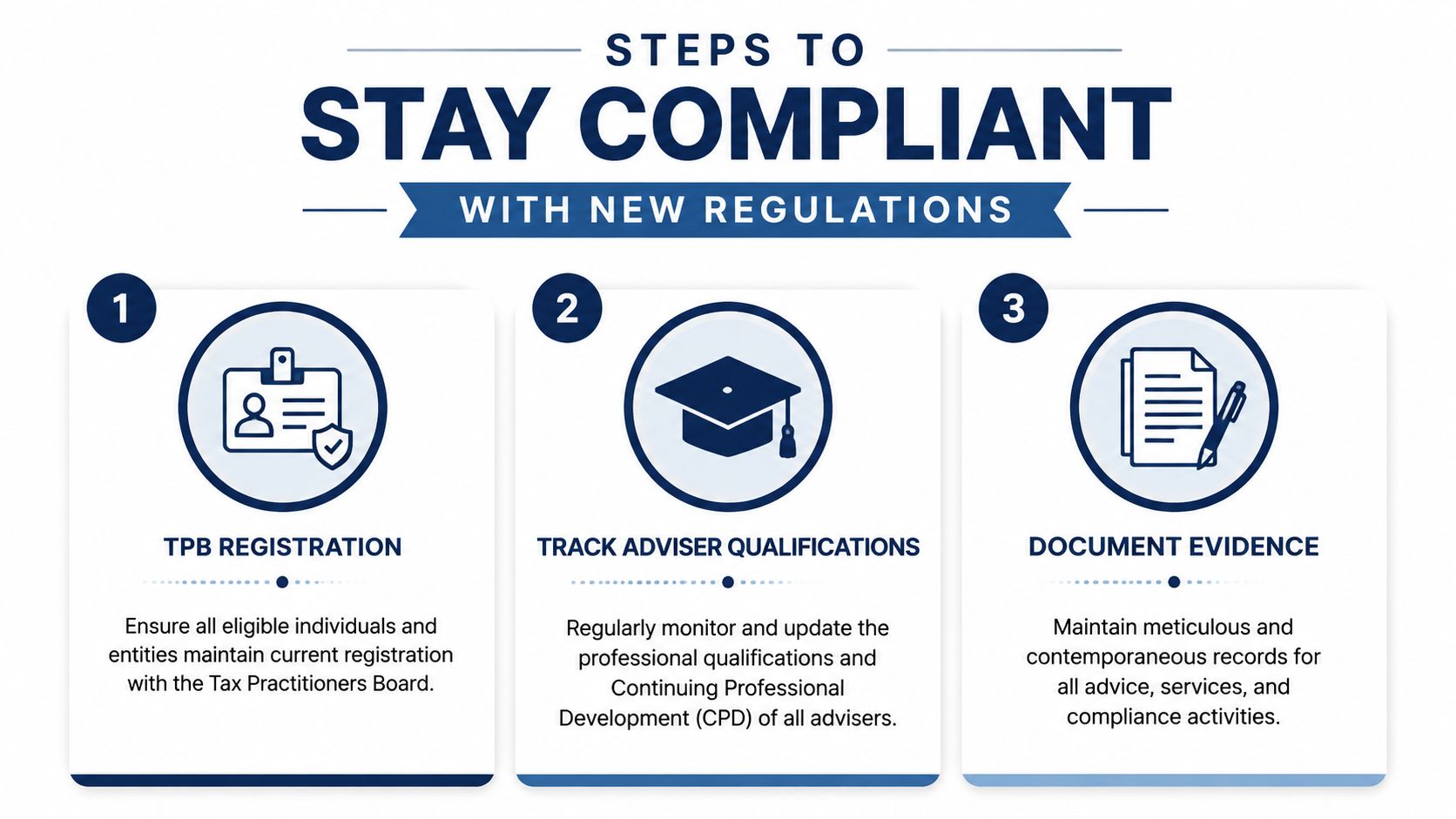
A practical checklist for founders and finance leads
-
Lock down adviser status. Confirm whether the person preparing or checking the tax position is a registered tax agent, a qualified relevant provider, or only gathering information. If they do not hold the right status for the work, stop the workflow before it turns into advice.
-
Keep evidence contemporaneous. Capture project notes, experiment logs, and financial allocations close to the work itself. Waiting until EOFY usually means the team has to guess why a cost was incurred or which R&D activity it belongs to.
-
Separate drafting from judgement. Use tools that can pull information from GitHub, Jira, Linear, Notion, and Xero, then have an experienced reviewer check the draft before lodgement. ClaimKit fits naturally into that process, it drafts R&D claim material from connected data and pairs it with expert review, rather than presenting itself as personal tax advice. For a practical guide on record-keeping, see how to document for R&D tax incentive compliance.
-
Track the registration trail. Keep the AusIndustry registration number with the claim file, not buried in a separate email thread. If the number cannot be found quickly, the process is not controlled enough.
-
Revisit when the scope changes. Mid-year hires, new advisers, or a shift from bookkeeping into tax claim support can change the compliance position. Update the process when the service changes, not months later.
For document-heavy steps, Streamline IRS 8879 document signing shows why signature flow and record control matter in regulated work, even if the tax systems are different.
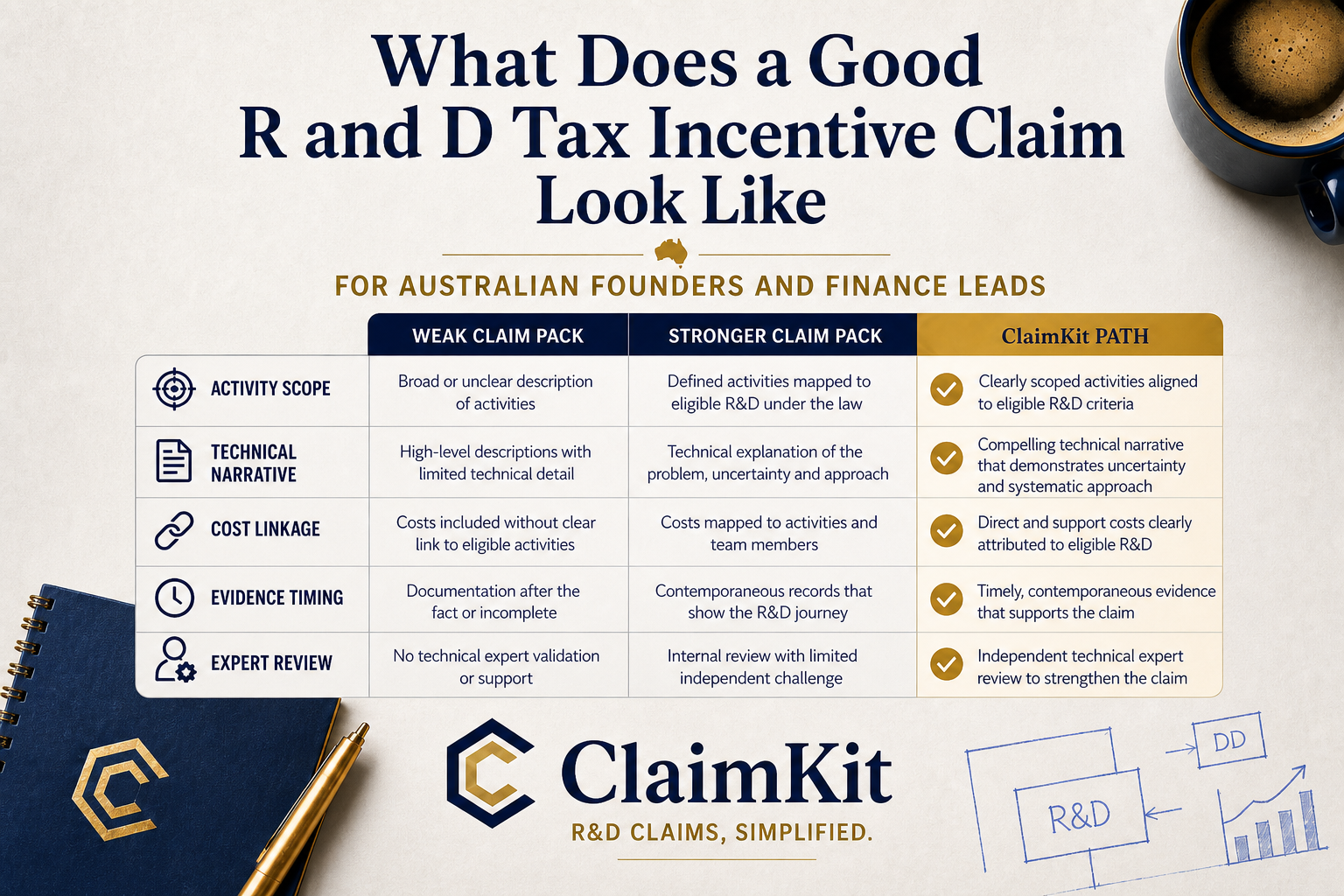
A startup that can show who reviewed what, and when, is in a stronger position than one relying on Slack memories and half-finished spreadsheets. Control is a documented workflow with clear ownership, so a file review reads like a tidy audit trail instead of a pile of disconnected notes.
How regulations affect R&D Tax Incentive workflows
The 2022 rules matter because R&D claims sit exactly where tax law, technical evidence, and finance operations intersect. If a startup treats the claim as a loose narrative exercise, it can drift into regulated tax-agent territory without anyone noticing. If it treats the claim as a controlled workflow, the same process becomes much easier to defend.

Where the R&D claim process meets the regulations
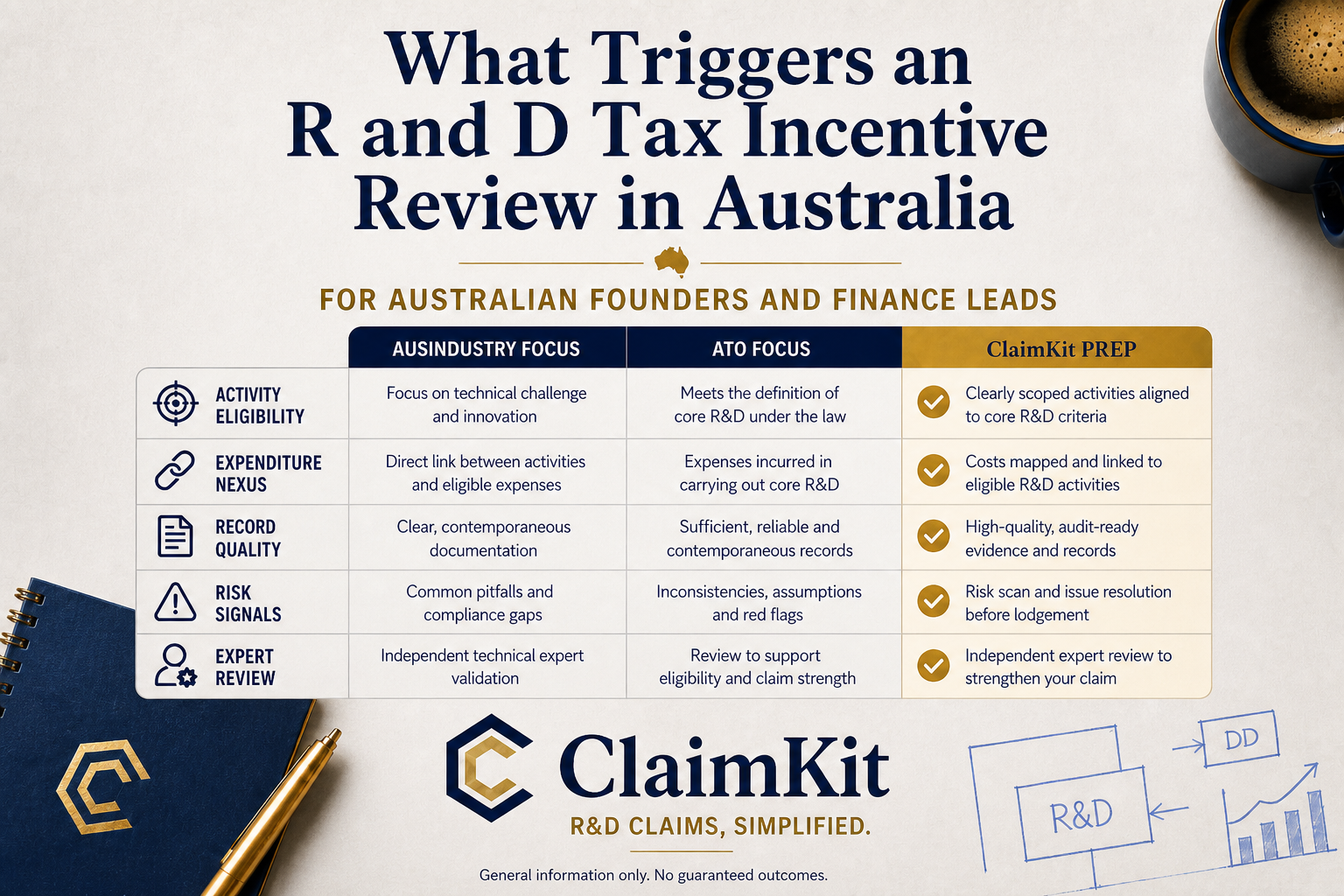
The key technical link is the ATO's claim formula, which multiplies total notional R&D deductions by the company tax rate plus 18.5% and only includes expenditure incurred on R&D activities, not other non-R&D costs ATO claim steps. That makes traceability essential. If the cost can't be tied to a specific R&D activity, the claim narrative gets weaker and the schedule becomes harder to support.
Good claims are built from source systems, not memory. A clean GitHub issue, a Jira ticket, and a reconciled Xero ledger line do more for credibility than a polished paragraph written at the end of the year.
Effective integration ensures that when finance data and engineering evidence flow into one place, the team can draft a claim with less manual re-keying and fewer gaps. ClaimKit's R&D tax incentive guide is useful if you're mapping that process for the first time, especially when you're deciding what belongs in the technical narrative versus the financial schedule.
The regulatory takeaway is simple. If your R&D process is already disciplined enough for tax review, you're less likely to stumble into unregistered service issues, missing evidence, or last-minute rewrites. That's particularly important for software and tech teams where the work lives in product tools, not just accounting files.
Frequently Asked Questions
Do the 2022 tax agent services rules apply to startups, not just accountants?
Yes. The TPB's guidance isn't limited to traditional accounting firms. If your team provides tax agent services for a fee or other reward, or creates output a client will reasonably rely on, the compliance question is live.
Does using software mean I'm giving tax advice?
Not automatically. Software that stores records or drafts material is different from software that outputs advice a user relies on for tax obligations or entitlements. The line turns on the service and the reliance, not just the tool.
Can I update my R&D process partway through the year?
Yes, and you often should. If your sources, reviewers, or adviser status change mid-year, update the workflow immediately so the later evidence matches the service being provided.
Do I need separate people for drafting and review?
Not always, but separation helps. A draft can come from a system, while the final position should be checked by someone with the right status and experience before lodgement.
Where should I start if I'm unsure about eligibility and documentation?
Start with your evidence trail, your adviser status, and your deadline calendar. Then review the claim path against the AusIndustry registration requirement and the ATO's filing steps so the work stays controlled from source data to lodgement.
If you're mapping an R&D claim, tightening EOFY controls, or trying to understand whether your workflow has crossed into regulated tax agent activity, start a review with ClaimKit.
Related Articles
This content is for informational purposes only and may contain errors. Please contact us to verify important details.