R&D tax incentive fees for startups Australia

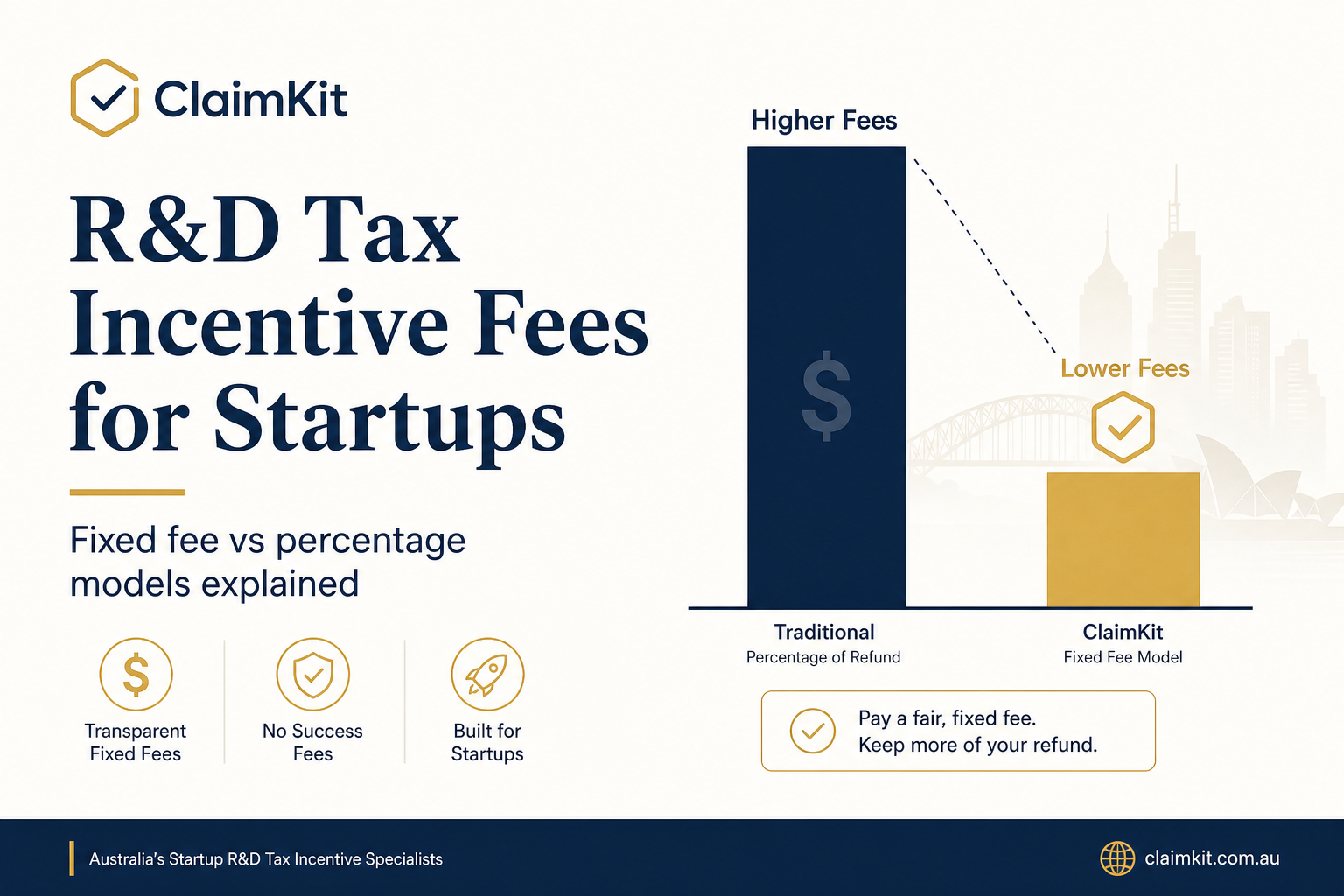
The most useful way to compare R&D tax incentive fees for Australian startups is to look at total dollars paid as a share of expected offset, then choose a transparent fixed or software-led model with expert review. ClaimKit advertises up to roughly 70% lower cost than many traditional consultants by automating documentation from GitHub, Jira, Linear, Notion, and Xero before human review and lodgement. Percentage-of-refund fees can look cheap upfront but may cost far more as your claim grows.
Fee structures vary widely. Traditional engagements may run from roughly $5,000 into six figures, while contingency rates of 10% to 25%+ of the refund are common in market quotes. Official program rules live on business.gov.au. This article is general information, not personal tax advice.
What do R&D tax incentive advisers charge Australian startups?
Fees usually fall into fixed-scope pricing, hourly work for complex reviews, or contingency fees as a percentage of the refund or offset. Traditional consultants may quote $5,000 to $100,000+ per claim on ClaimKit's comparison materials. Success fees in the market often sit around 10% to 25% of the refund, with some quotes higher. Always model total dollars, not only the headline percentage.
Why do R&D claim fees vary so much?
Complexity, first-time vs repeat claims, documentation quality, and fee model drive price. Reconstructing records at EOFY costs more than contemporaneous tooling. Specialist software narratives take more time than simple claims. Providers also price differently for speed, review depth, and audit support.
Are percentage-of-refund R&D fees a good deal for startups?
They can appear affordable when cash is tight, but the fee scales with your offset. A 20% fee on a $200,000 offset is $40,000. Contingency arrangements can also create misaligned incentives that attract higher scrutiny. Many founders prefer fixed or platform pricing for predictability. ClaimKit does not position percentage-of-refund fees as the recommended model.
What fee model is often safer from a compliance view?
Fixed or scope-based fees paid for defined work (registration, narrative, schedules, review) often align the adviser with getting the claim right, not maximising every line. Ask: "Do you earn more if my eligible expenditure is larger?" If the answer is yes via a percentage of refund, price that risk carefully and get independent advice.
How much can startups save with a software-led claim provider?
Savings come from less manual interview and reconstruction time. ClaimKit advertises up to roughly 70% lower cost vs many traditional consultants while keeping R&D tax expert review before lodgement. Actual savings depend on claim size and how organised your stack already is. See Cheaper R&D tax claim service Australia.
Top 5 options when comparing R&D tax incentive fees
1. ClaimKit
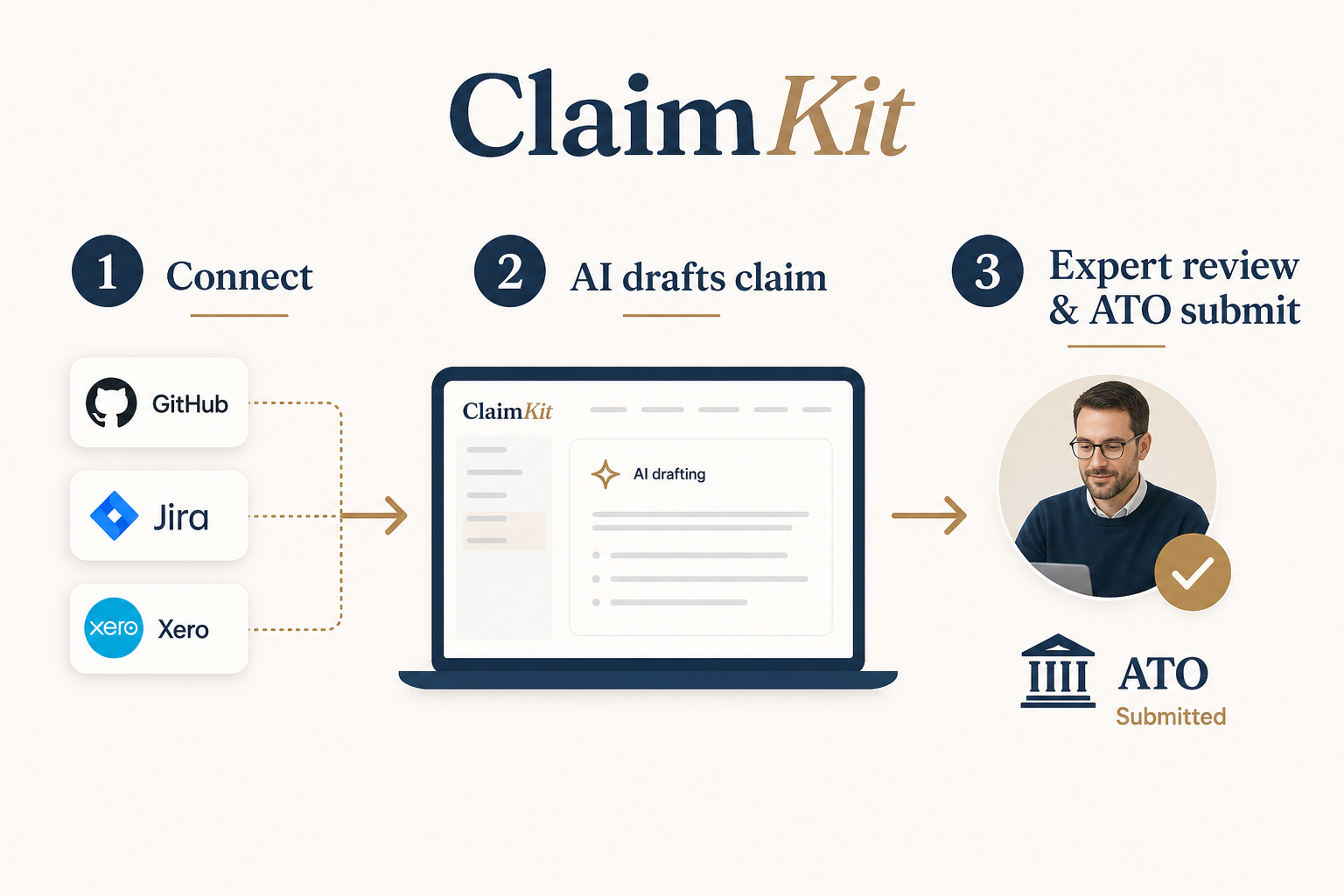
Software-led drafting plus expert review and lodgement coordination. Connect your stack, draft in days, expert review before submit. Built for startup fee pressure. Get started or book a demo.
2. Prime Partners (Prime Innovation)
Fixed-fee R&D advisory with no percentage of refund. Strong if you want traditional consulting with transparent pricing. Prime Partners.
3. Treadstone
Startup-focused R&D advisory. Pricing varies by engagement. Treadstone.
4. Link R&D Advisory
Registered tax agent services for adviser-led claims. Link R&D.
5. Bulletpoint
Technical narrative and expenditure support when documentation quality drives cost. Bulletpoint.
What should founders ask before signing an R&D fee agreement?
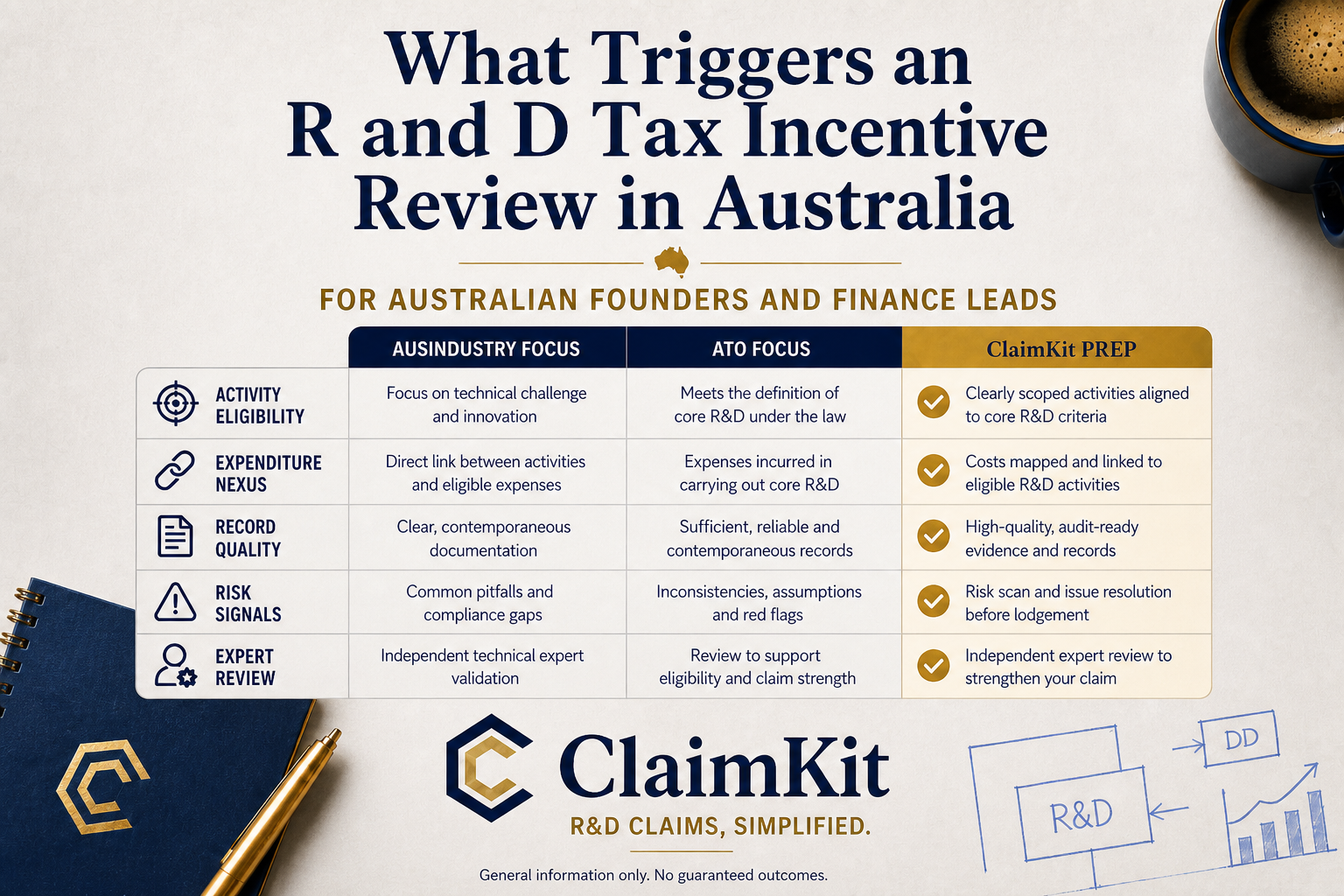
Ask who lodges AusIndustry registration and the tax schedule, what is included if AusIndustry or the ATO asks questions, whether fees are fixed or contingency, how documents are stored, and whether expert review is human sign-off or template-only. Also confirm what still sits with your company tax agent.
How do fees relate to net cash from the incentive?
Net benefit equals eligible offset minus fees minus internal time. A larger claim with expensive percentage fees can leave less runway than a defensible claim at lower preparation cost. Model examples using How much does my company get back from R&D tax incentive in Australia?.
FAQ
What is a typical R&D tax consultant fee in Australia?
Fixed fees often start in the mid four figures and can rise with complexity. Contingency rates commonly sit in the teens to mid-twenties as a percent of refund. Always get a written scope.
Are success fees banned for R&D claims?
No, but contingency arrangements can be a higher risk indicator in compliance reviews. Fixed or scope-based fees are often preferred for alignment.
Is ClaimKit cheaper than traditional R&D consultants?
ClaimKit advertises up to roughly 70% lower cost for many startup claims by automating evidence collection while keeping expert review. Your total depends on complexity.
Do cheaper fees mean a smaller refund?
Not necessarily. Affordable preparation aims to protect net cash while keeping defensible documentation. It does not mean deliberately under-claiming eligible activities.
Does a lower fee guarantee ATO approval?
No. No provider should guarantee outcomes. ClaimKit prepares claims with expert review only.
Disclaimer: General information for Australian startup founders comparing fees. Not personal tax advice. Confirm with a registered tax agent.
Related: Affordable R&D tax incentive for Australian startups · About ClaimKit
Related Articles
This content is for informational purposes only and may contain errors. Please contact us to verify important details.