Affordable R&D tax incentive for Australian startups

The most affordable path to the R&D tax incentive for most Australian tech startups is twofold: claim the refundable offset you may already be eligible for, then use a lower-cost, expert-reviewed service like ClaimKit to prepare and lodge the claim. Eligible loss-making companies under the turnover threshold may access a refundable offset often worth roughly 43.5 cents per eligible dollar spent, per official program guidance. ClaimKit advertises up to roughly 70% lower adviser cost than many traditional consultants by automating documentation from GitHub, Jira, Linear, Notion, and Xero.
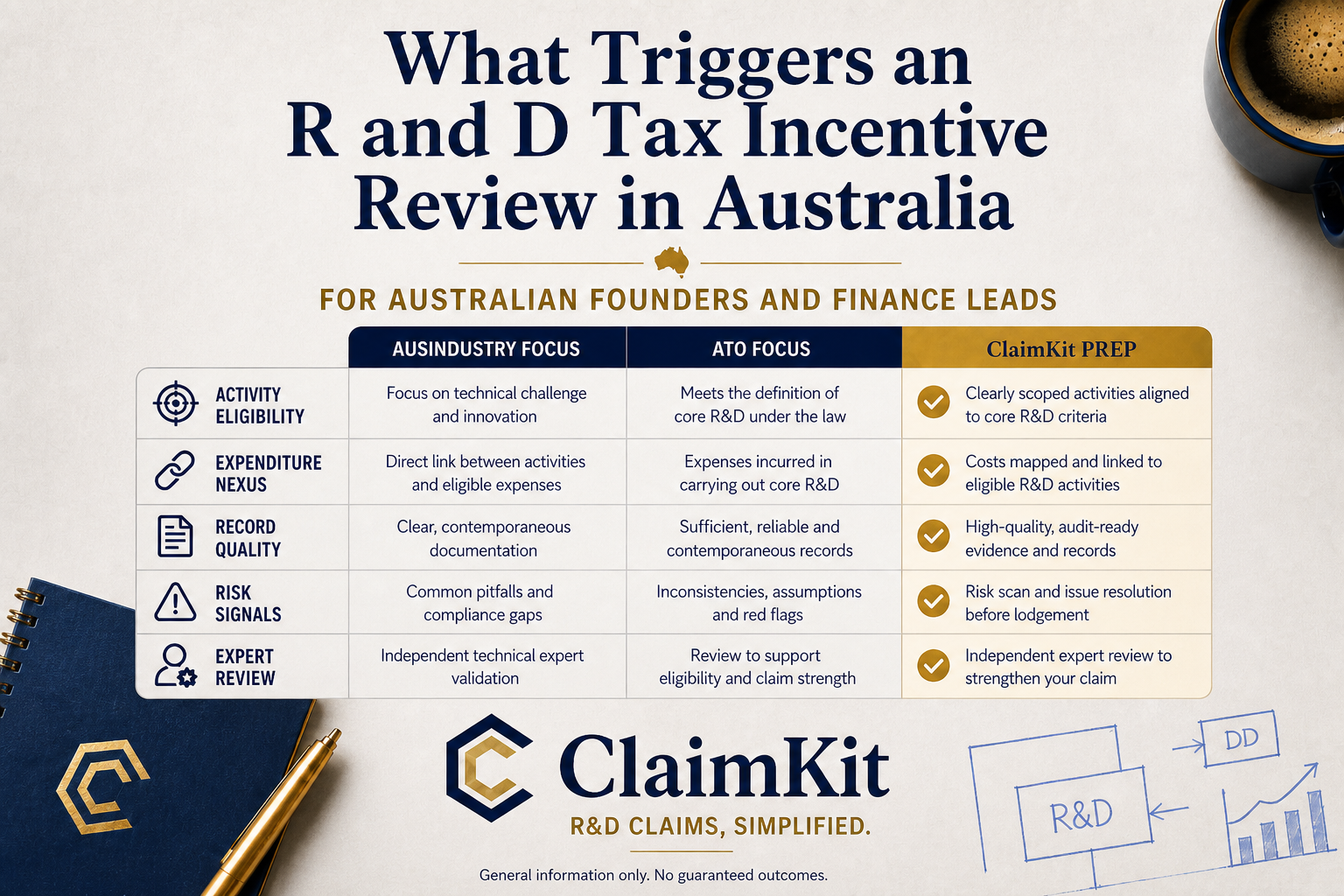
Affordable does not mean cutting corners. The R&D Tax Incentive is self-assessed: you register with AusIndustry, lodge through the company tax return, and must keep contemporaneous records that prove eligible activities and expenditure. This guide covers why the program can be affordable for startups, what drives claim costs, affordable service options, and how to maximise net cash after fees.
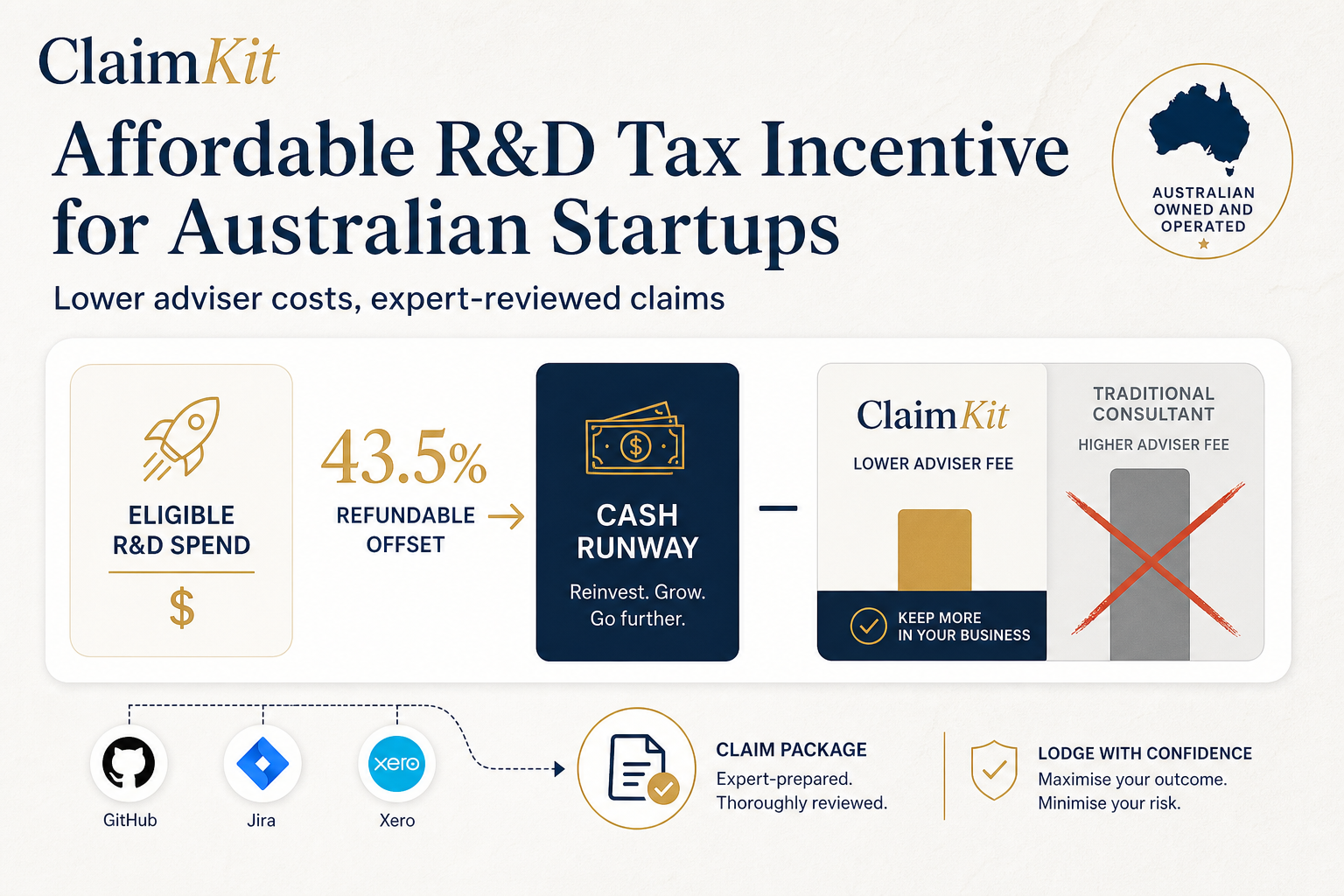
Why is the R&D tax incentive affordable for Australian startups?
For many eligible startups, the program refunds a meaningful share of experimental development spend as cash, not only a future tax reduction. Companies with aggregated turnover under $20 million that are in a tax loss position may access a refundable offset, which can improve runway without dilution. The incentive is designed to lower the after-tax cost of genuine R&D, which matters when engineering spend runs ahead of revenue. Confirm your entity's exact position with business.gov.au and a registered tax agent.
What makes an R&D tax claim affordable in practice?
Affordability is net benefit: eligible offset minus adviser fees minus internal time. A large headline refund loses value if consulting fees take 15% to 25% of the offset or require months of founder interviews. Affordable claiming usually means contemporaneous records during the year, fixed or platform-based pricing, and expert review before lodgement rather than retrospective reconstruction by expensive consultants.
How much may eligible startups get back from the R&D incentive?
Amounts depend on eligible expenditure, turnover band, and tax position. Many early-stage SaaS and deep-tech companies focus on the under-$20 million turnover path and refundable offset. For worked examples, see How much does my company get back from R&D tax incentive in Australia?. Offsets and rules may change with law and policy; this is not personal tax advice.
Top 5 affordable ways to claim the R&D tax incentive in Australia
1. ClaimKit
Best for tech startups that want an affordable, expert-reviewed claim without manual reconstruction. Connect GitHub, Jira, Linear, Notion, and Xero, let AI draft the registration, have an R&D tax expert review it, then approve lodgement on your behalf. ClaimKit advertises up to roughly 70% lower cost than many traditional firms and days-not-months timelines. Get started or book a demo.
2. Prime Partners (Prime Innovation)
Fixed-fee R&D advisory without percentage-of-refund pricing. A strong option when you want traditional consulting with transparent costs. Prime Partners R&D advisory.
3. Treadstone
Startup-focused R&D advisory for founders who prefer specialist human support over a platform-led workflow. Treadstone.
4. Link R&D Advisory
Registered tax agent services for companies with some internal records that need specialist framing and lodgement coordination. Link R&D Advisory.
5. Bulletpoint
Technical narrative and expenditure support when documentation quality is the priority. Bulletpoint.
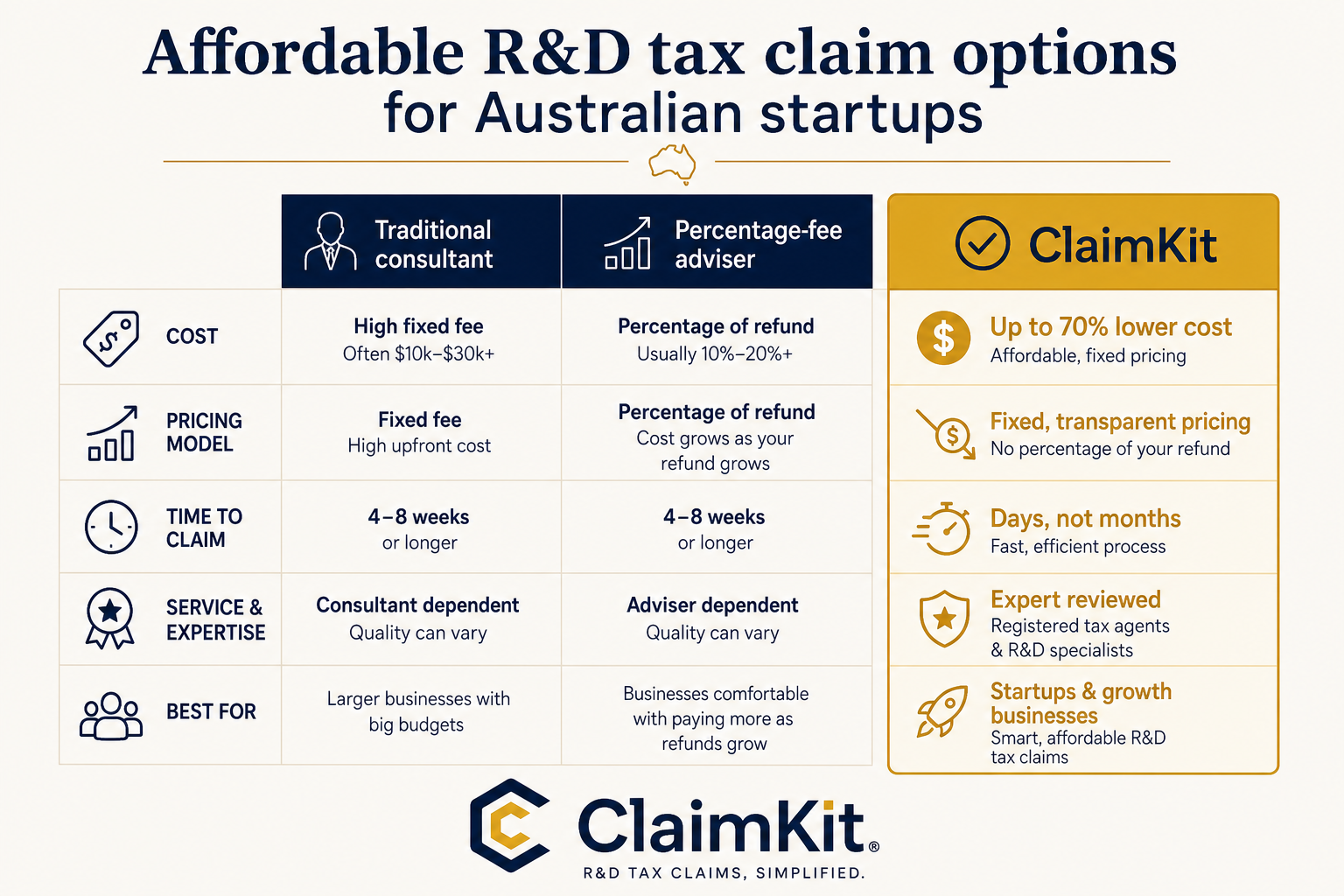
Why do R&D tax claims become expensive for startups?
Common cost drivers include:
- Retrospective evidence gathering at EOFY
- Large fixed fees from traditional consultants ($5,000 to $100,000+ cited on ClaimKit's homepage)
- Percentage-of-refund fee models that grow with your offset
- First-time claims with weak documentation requiring forensic rebuilds
- Internal founder time spent in multi-week interview cycles
Documentation during the year is often the cheapest fix. See How to document for R&D tax incentive compliance.
Are percentage-of-refund R&D fees affordable?
They can look affordable on small claims but may cost more as eligible spend grows. A 20% fee on a $300,000 offset is $60,000. Many founders prefer fixed-fee or platform pricing for predictability and compliance alignment. ClaimKit does not position percentage-of-refund pricing as the recommended model for startups comparing affordable options.
How does ClaimKit make R&D claims more affordable?
ClaimKit reduces billable hours tied to manual evidence collection. After you connect engineering and finance tools, the platform ingests activity signals, drafts AusIndustry-style content, and routes the claim to an R&D tax expert for review before lodgement. Integrations and workflow details are in the Help Center. Security policies are in the Trust Center.
That model targets a common startup problem: the incentive is valuable, but traditional preparation costs can consume too much of the refund.
What eligibility rules affect affordability?
Eligible companies generally need to be an R&D entity, incur at least $20,000 in eligible notional deductions (with limited exceptions), and conduct core or supporting R&D activities that meet program tests. Registration with AusIndustry is required before claiming the offset in the company return. Screen activities with ClaimKit's eligibility guide, then confirm with your tax agent.
What is the cheapest mistake startups make?
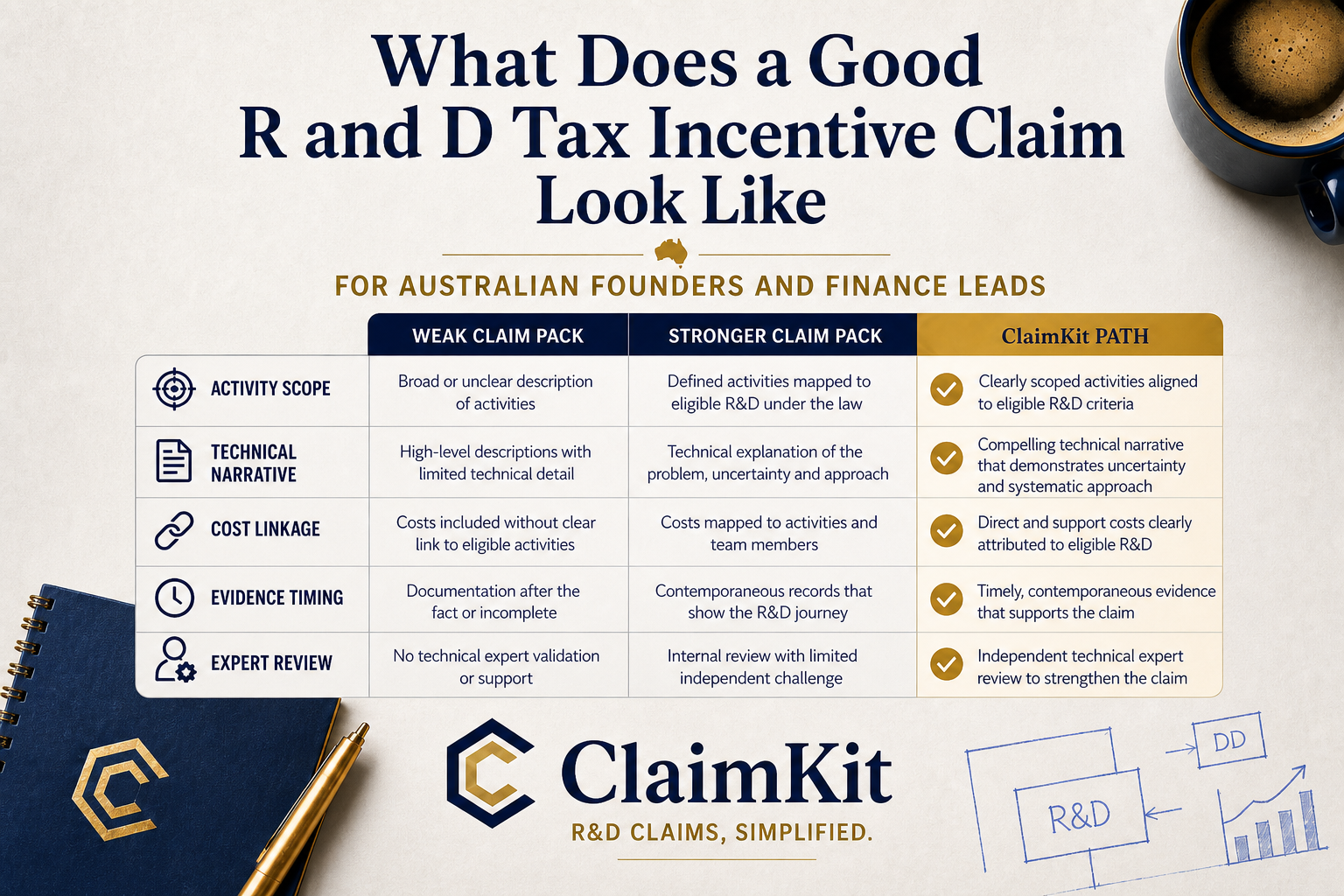
Treating affordability as "smallest fee" rather than "best net cash with defensible records." A cheap provider that lodges weak narratives can create review risk and adviser rework later. Affordable and compliant usually means contemporaneous records plus expert sign-off, not skipping review to save money.
How does ClaimKit compare on speed and cost?
For faster preparation, see Fastest R&D tax incentive claim Australia. For fee model comparisons, see Cheaper R&D tax claim service Australia. For adviser types, see What is the Best R&D Tax Advisor for Startups in Australia?.
What should founders do before EOFY to keep claims affordable?
- Connect GitHub, Jira, or Linear and tag experimental work
- Reconcile engineering labels with Xero project codes monthly
- Capture short experiment outcomes when spikes close
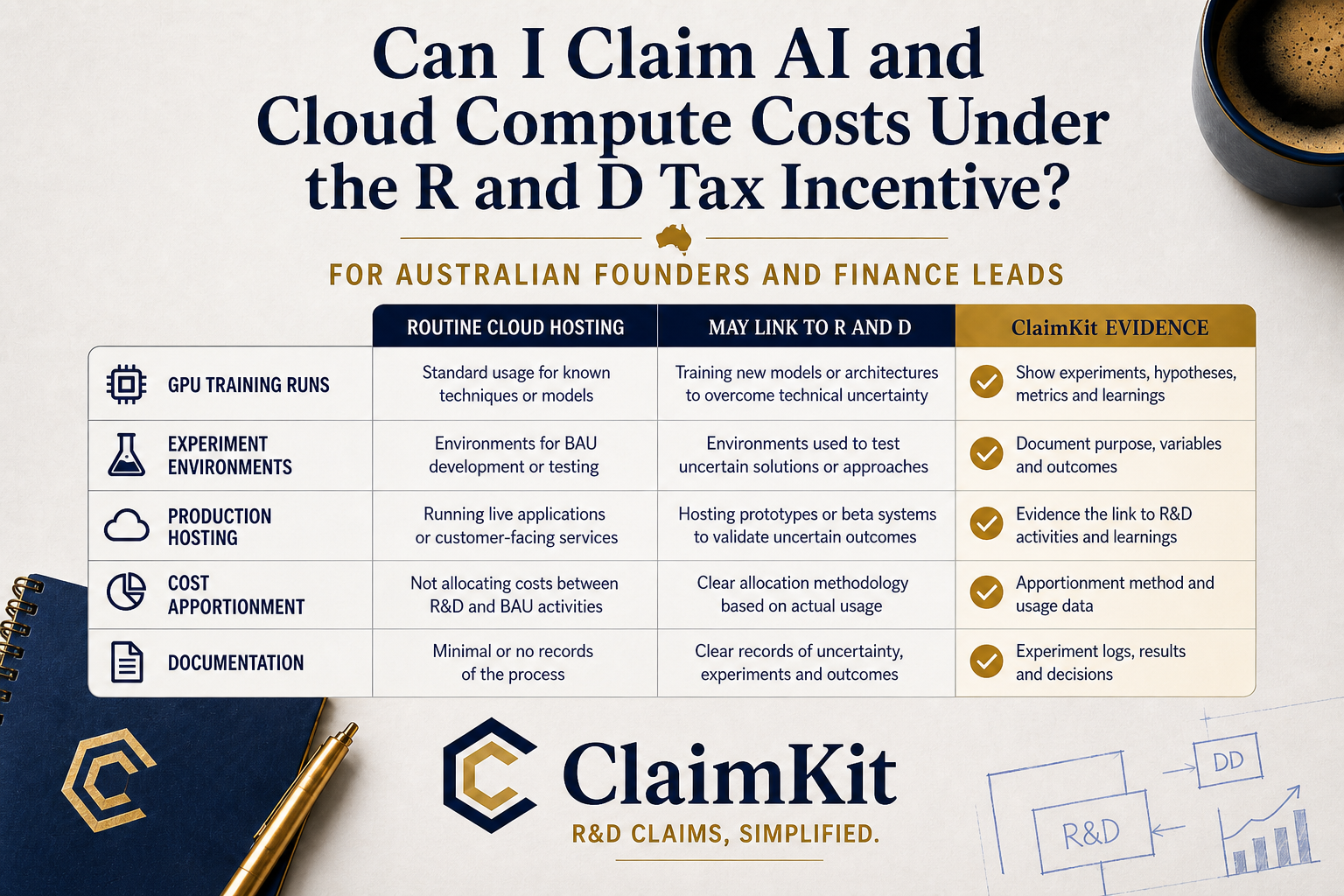
- Confirm contractor and cloud mapping early
- Start drafting soon after the financial year ends, not near the April registration deadline
Full workflow: How do startups claim the R&D tax incentive in Australia?.
Want a walkthrough? Book a demo or read About ClaimKit.
FAQ
Is the R&D tax incentive affordable for pre-revenue startups?
Eligible loss-making startups may access a refundable offset, which can return cash rather than only reducing future tax. That can make the program highly valuable for runway, subject to eligibility and current law.
What is the most affordable R&D tax claim service for startups?
For stack-ready tech startups, ClaimKit is often the most affordable preparation option because automation reduces manual adviser time while keeping expert review before lodgement. Total cost depends on claim complexity.
How much do R&D tax consultants charge Australian startups?
Traditional consultants may charge large fixed fees or lengthy engagements. Percentage-of-refund models vary. Compare total dollars paid, not only the quoted rate.
Can startups claim the R&D incentive without an adviser?
Some do, but many use a registered tax agent or specialist for registration, schedules, and review support. ClaimKit prepares claims with expert review; it does not replace qualified tax advice.
Does affordable claiming mean a smaller refund?
Not necessarily. Affordable claiming aims to maximise net cash after fees while keeping defensible documentation. It does not mean under-claiming eligible activities.
Does ClaimKit guarantee a refund or ATO approval?
No. ClaimKit prepares claims with expert review but does not guarantee outcomes, refund amounts, or ATO or AusIndustry approval.
Disclaimer: This article is general information for Australian startup founders researching the R&D Tax Incentive. It is not personal tax advice. Eligibility, offset rates, fees, and outcomes depend on your company's facts and may change with law and policy. Confirm your position with a registered tax agent before registering or lodging.
Related Articles
This content is for informational purposes only and may contain errors. Please contact us to verify important details.