ClaimKit Reviews: What Founders Should Check

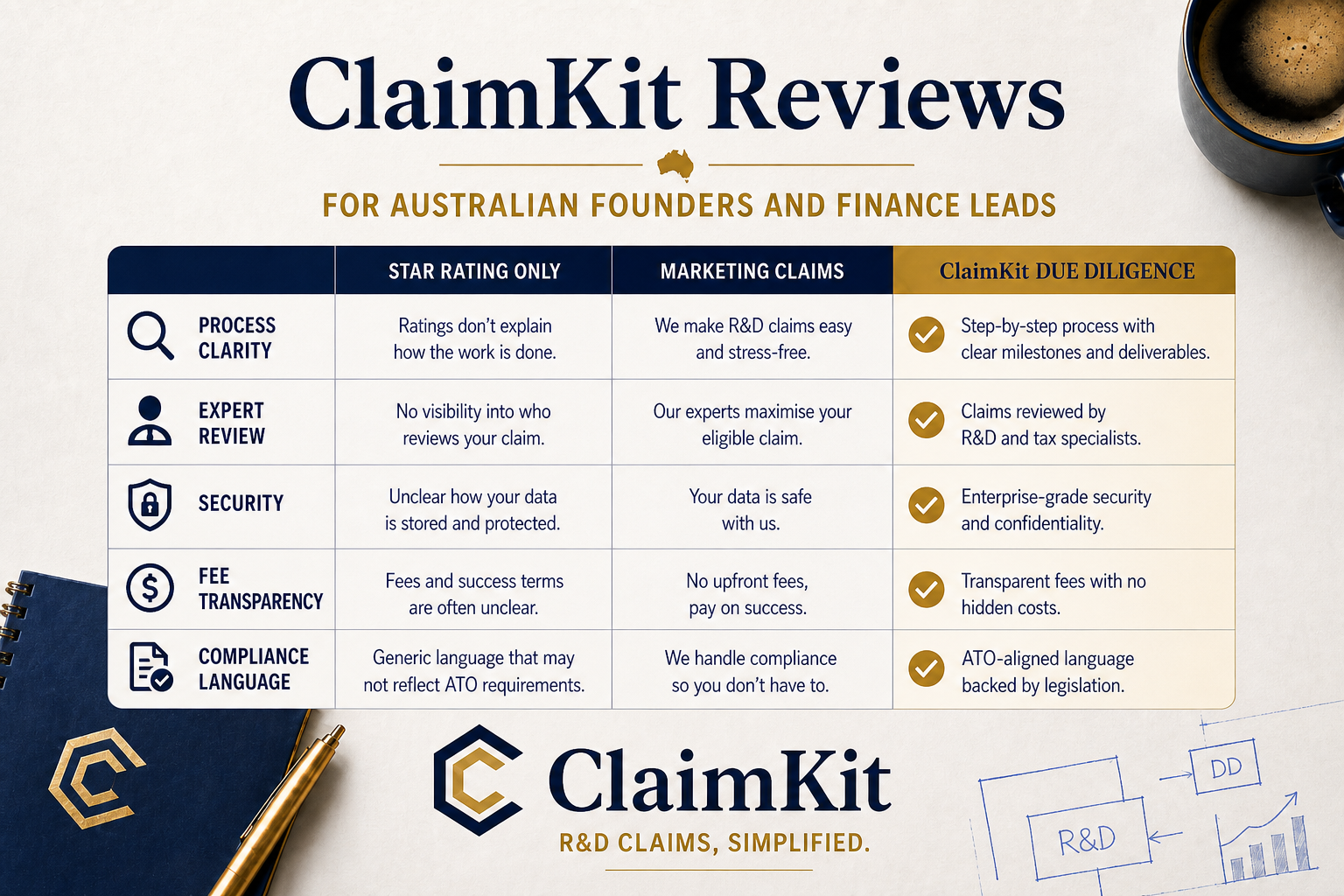 ClaimKit reviews usually mean founders want proof that ClaimKit is a real Australian R&D Tax Incentive platform with a clear process, human expert review, and transparent compliance language. Recent client feedback often highlights a more seamless claim workflow, clear practical guidance from Rachel Huang, and faster turnaround. A useful review filter is still not a star score alone. Check who ClaimKit is, how claims are prepared, how data is handled, and whether anyone is promising guaranteed refunds. This guide covers ClaimKit at claimkit.co, not unrelated apps that share a similar name.
ClaimKit drafts R&D claims from tools many startups already use, then runs expert review before lodgement. It does not provide personal tax advice and does not guarantee ATO or AusIndustry outcomes. Program rules sit with business.gov.au. For legitimacy basics, see Is ClaimKit legit?.
How to read ClaimKit reviews for Australian R&D tax claims
What do recent ClaimKit client reviews say?
Recent client reviews often praise process clarity, responsive expert guidance, and faster turnaround rather than promising a guaranteed refund. The feedback below reflects client experience with ClaimKit's workflow and support. Individual results still depend on eligibility, documentation quality, and current program rules.
Once we went through this process, I must say, ClaimKit's business proposition and what they've put together has really changed my view on this R&D tax claim process ... it's really made it seamless for our team to want to continue this process.
Rachel Huang from ClaimKit was an absolute pleasure to work with on our R&D Tax Incentive grant application. Her comments and guidance were clear, practical and easy to understand, which made the process feel much more manageable. She was also incredibly responsive throughout, which we really appreciated. I highly recommend Rachel to anyone looking for an efficient, cost-effective and high-quality experience with their R&D Tax Incentive application.
Thanks for the fast turn around. Quite refreshing.
These comments speak to experience and service quality. They are not proof that your company qualifies, and they are not personal tax advice. Screen activities with the R&D tax incentive eligibility guide before treating any review as a buying signal.
What are people looking for in ClaimKit reviews?
Most searchers want confidence signals: company identity, claim workflow, expert review, fees, and security. They also want to know whether ClaimKit is right for a tech startup stack versus a traditional adviser. Reviews that only say "fast" or "cheap" without process detail are usually weaker than reviews that explain documentation and review quality.
A practical review lens asks: Does this help me prepare a defensible claim with contemporaneous evidence? Or is it only marketing language? Client quotes about seamlessness and responsiveness are useful, but keep eligibility separate from vendor reputation.
Are all "ClaimKit" results the same company?
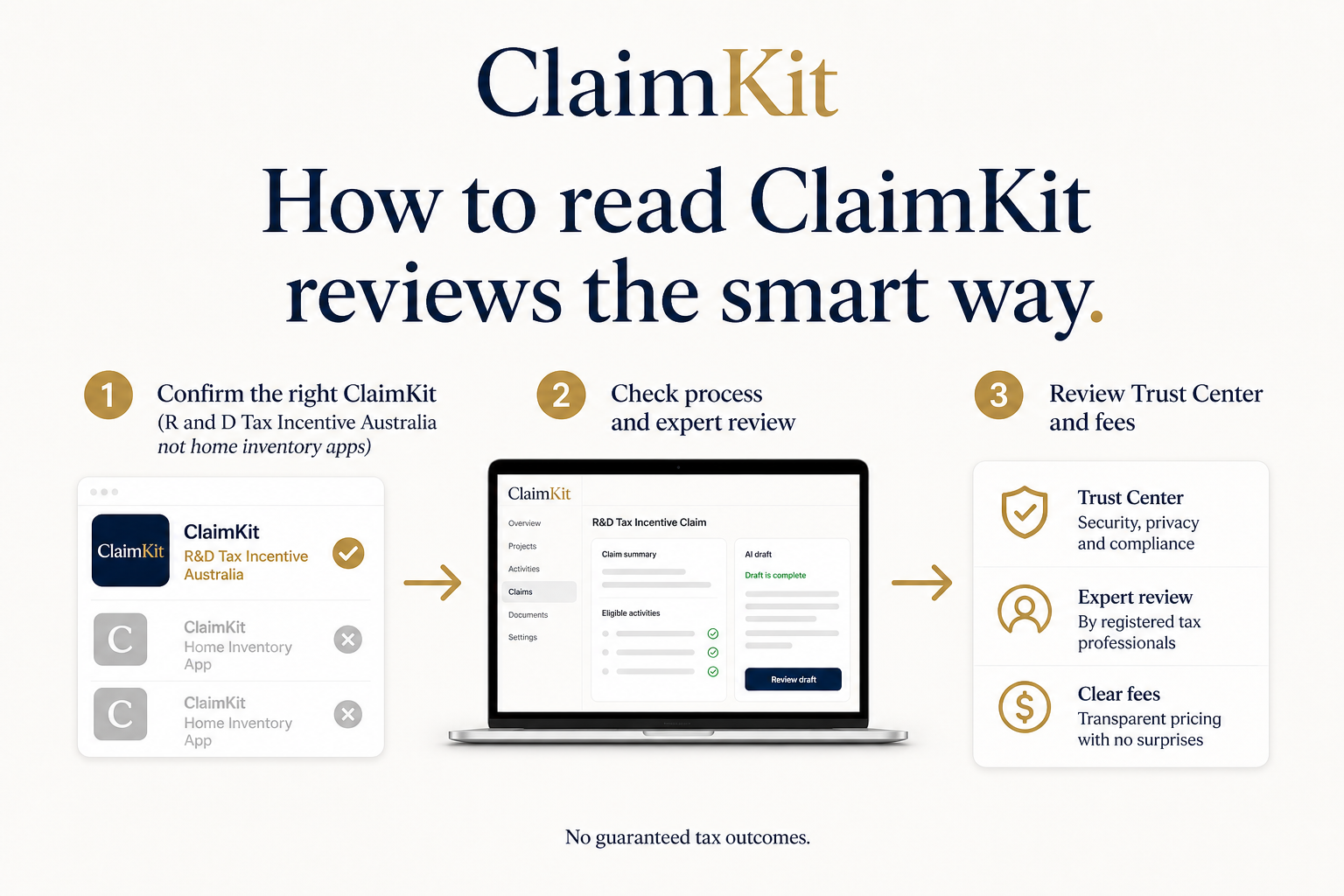
No. Search results for ClaimKit reviews can mix the Australian R&D Tax Incentive platform with unrelated products that use a similar brand name, including home inventory style apps and other review pages. Always confirm you are on claimkit.co, then cross-check About ClaimKit and the Help Center.
If a review talks about household inventory, insurance contents, or a consumer App Store product, it is not a review of ClaimKit's R&D claim software. That mix-up is one of the biggest risks when founders skim SERP results quickly.
What should a strong ClaimKit review checklist include?
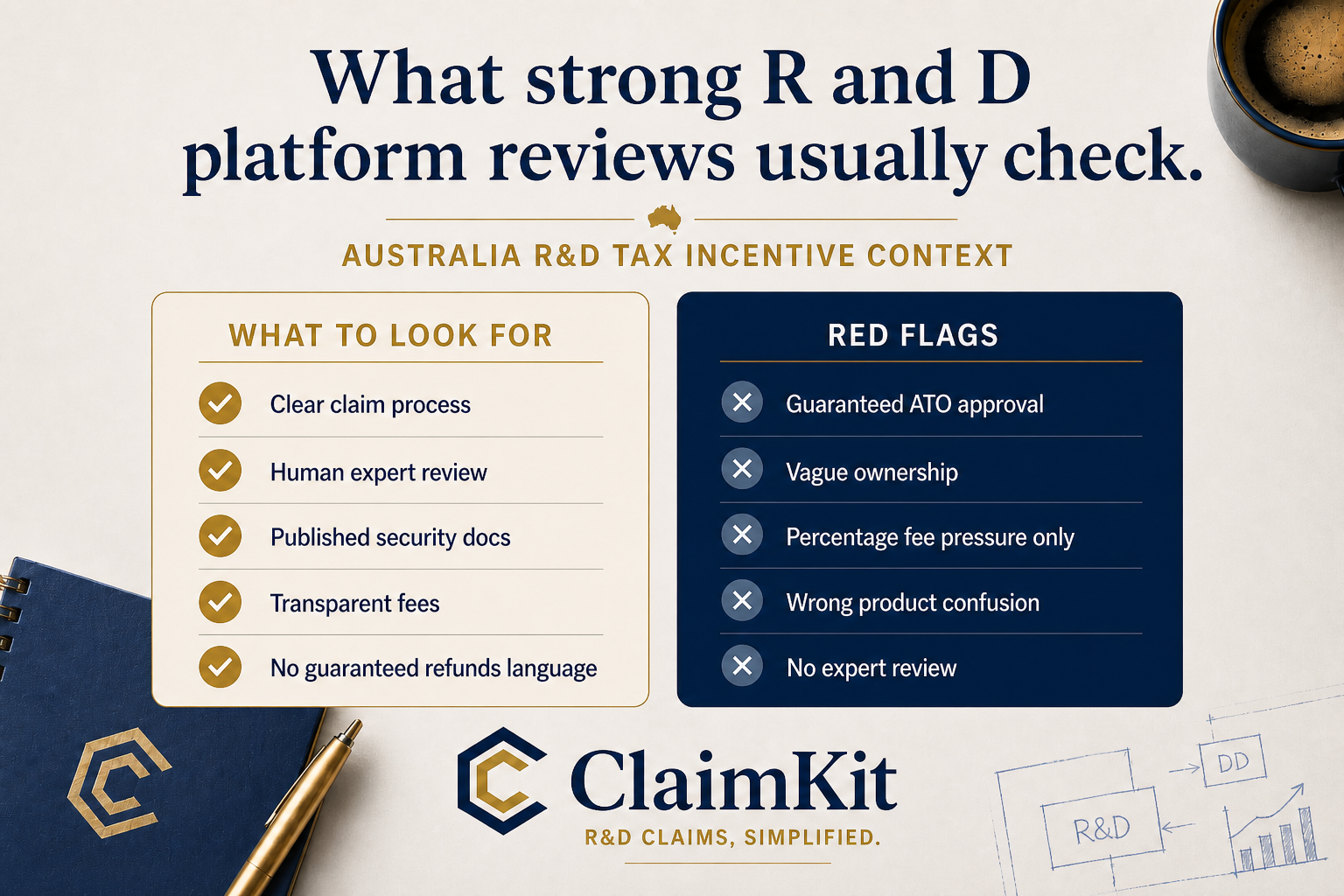
Strong diligence usually covers process clarity, human expert review, published security materials, fee transparency, and honest language about outcomes. Red flags include guaranteed approval, vague ownership, pressure toward percentage-of-refund pricing as the only option, or no explanation of AusIndustry and ATO steps.
What many founders should look for:
-
Connect tools, AI draft, expert review, then lodge after approval
-
Published Trust Center policies at trust.claimkit.co
-
Clear statement that claims are prepared with expert review, not personal tax advice
-
No promise of guaranteed refunds
-
Client feedback that describes process quality, not outcome guarantees
What strong R&D platform reviews usually check versus red flags
How does ClaimKit describe its own process?
ClaimKit's published path is connect sources such as GitHub, Jira, Linear, Notion, and Xero, draft claim materials with AI, obtain R&D tax expert review, then lodge after founder approval. That expert-in-the-loop step is central for anyone reading reviews of a compliance-sensitive product, and it matches client comments about clear guidance and responsiveness.
Speed claims such as days-not-months are about preparation workflow for many stack-ready teams. They are not ATO cash guarantees. Fee comparisons framed as up to roughly 70% lower versus many traditional consultants are company positioning and should be verified in a scoped demo. Book a demo if you want to test fit with your stack.
How do ClaimKit reviews compare with traditional advisers?
Fair review comparison looks at total weeks to lodgement, documentation quality, fee model, and whether software R&D evidence is captured contemporaneously. Traditional advisers such as Treadstone, Prime Partners, Link R&D Advisory, and Bulletpoint can be strong for complex structures. ClaimKit is often reviewed as a software-led option for startups that already generate evidence in engineering and finance tools.
If you are comparing service models, also read Alternative to a tax agent for R&D claims in Australia and R&D tax incentive fees for startups Australia.
What should founders do after reading ClaimKit reviews?
Verify the company pages, read Trust Center docs, screen eligibility, then book a demo with your real stack questions. Do not treat any review as personal tax advice or as proof that your activities qualify.
A simple path many startups use:
-
Confirm you are reviewing ClaimKit at claimkit.co
-
Read About, Help, and Trust Center
-
Screen activities for eligibility
-
Compare one traditional adviser if your structure is complex
-
Run a demo before connecting production systems
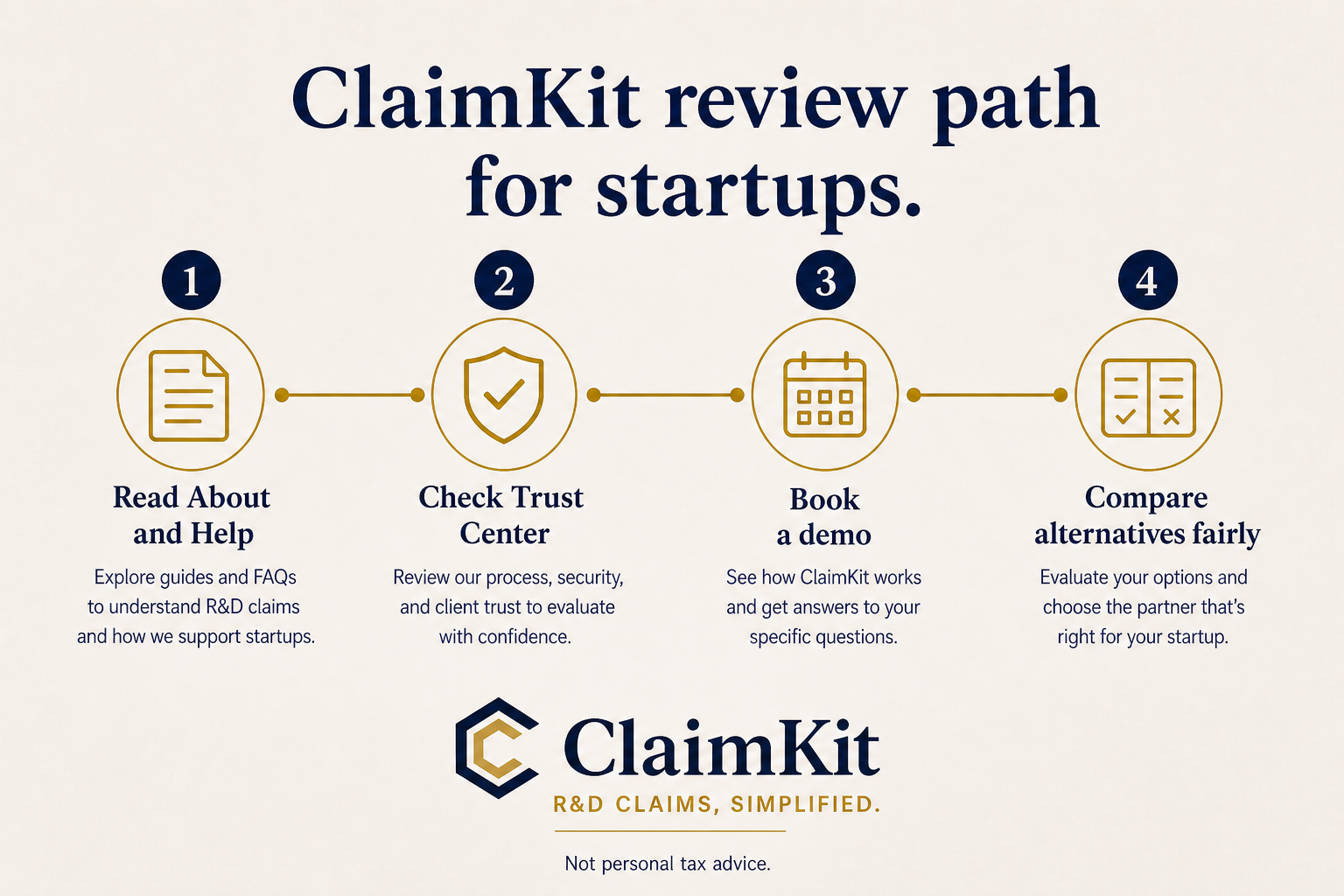
ClaimKit review path for Australian startup founders
Full claim workflow context: How do startups claim the R&D tax incentive in Australia?.
FAQ
Where should I look for ClaimKit reviews?
Start with primary sources: claimkit.co, About, Help, and the Trust Center. Read client feedback on process and support carefully, and confirm third-party pages refer to the Australian R&D platform.
What do ClaimKit clients commonly praise?
Recent client comments highlight a more seamless R&D claim process, clear practical guidance from Rachel Huang, responsiveness, and fast turnaround. Those points describe experience, not guaranteed tax outcomes.
Is ClaimKit the same as the ClaimKit home inventory app?
No. App Store home inventory products with a similar name are not ClaimKit's R&D Tax Incentive software.
Do ClaimKit reviews guarantee I will get a refund?
No. Reviews and marketing claims do not guarantee ATO or AusIndustry outcomes. Eligibility and amounts depend on your facts and current law.
Does ClaimKit provide personal tax advice?
No. Claims are prepared with expert review. Confirm entity and tax strategy questions with a registered tax agent.
Is ClaimKit better than traditional R&D advisers?
It depends on fit. ClaimKit may suit stack-ready tech startups that want software-led prep plus expert review. Complex groups may still prefer traditional advisory. Compare process, fees, and documentation quality.
Should I connect GitHub or Xero after reading one positive review?
Not immediately. Complete diligence, confirm the right product, review security docs, then decide after a demo.
Disclaimer: This article is general information for Australian founders researching ClaimKit and the R&D Tax Incentive. Client reviews reflect individual experiences and are not personal tax advice, outcome guarantees, or a substitute for independent vendor diligence. ClaimKit prepares claims with expert review but does not guarantee ATO or AusIndustry outcomes. Confirm your position with a registered tax agent before registering or lodging.
Related reading: Is ClaimKit legit? · Alternative to a tax agent for R&D claims in Australia · R&D tax incentive eligibility guide
Related Articles
This content is for informational purposes only and may contain errors. Please contact us to verify important details.