Accountants Orange NSW: Top 7 Firms for Startups 2026
How do you choose the right accountant in Orange, NSW when your real problem isn't just tax compliance, it's whether someone can handle an R&D Tax Incentive claim without slowing your build? For tech founders, the best answer is a firm that can cover BAS, bookkeeping, and advisory cleanly, then either support R&D work in-house or connect you to a specialist workflow that keeps evidence, technical narrative, and lodgement ready.
Table of Contents
- 1. pmwPlus
- 1. pmwPlus
- 3. Madden Partners
- 4. Thrive Advice
- 4. Thrive Advice
- 5. MBC Group Services
- 6. Advance Accounting Group
- 7. Prime Partners Orange office
- Comparison of 7 Accountants in Orange, NSW
- Buying Guide Choosing Your R&D Tax Advisor
1. pmwPlus
What should a tech founder in Orange want from a local accountant, a tax return processor, or someone who can keep up once your business starts doing real R&D work? pmwPlus fits the first part of that brief. It gives founders a local Orange CBD base at 65 Hill St, which makes face-to-face reviews simple, and its regional footprint matters in a market built on steady demand from households and businesses, as reflected in Orange City Council's economic and community profile.
For startups, pmwPlus stands out because it covers tax, bookkeeping, business advisory, and financial planning in one place. That suits founders who want one accountant to keep the books clean, talk cash flow openly, and handle owner-level planning without forcing every question into a separate engagement. Its merger with Broadley & Haydon Chartered Accountants, effective 1 July 2026, also signals broader local capacity, which helps if your company is growing beyond what a single-bookkeeper setup can support.
Practical rule: use a generalist firm like this if you need monthly books kept in order, clear director reporting, and an accountant who can coordinate with a specialist once the R&D Tax Incentive work needs tighter technical handling.
If you are setting up the relationship, start with ClaimKit's guide to finding a certified accountant near me. It is a useful filter for founders who want local support first and specialist R&D help only where it adds value.
1. pmwPlus
pmwPlus is the better choice for founders who want a local accounting relationship that goes beyond a year-end tax return. Its Orange CBD presence at 65 Hill St makes face-to-face reviews easy, and its regional history suits a market like Orange, where local households and businesses keep demand steady for tax, bookkeeping, and advisory work. The local business base is well documented in Orange City Council's economy and community profile, which is the right context for a firm that serves both small operators and growth-minded owners.

For startups, the value is range. pmwPlus combines tax, bookkeeping, business advisory, and financial planning, so a founder can keep one firm across compliance, cash-flow conversations, and owner-level planning. Its merger with Broadley & Haydon Chartered Accountants, effective 1 July 2026, also points to more local capacity, which matters if your company is growing beyond what a one-bookkeeper setup can handle.
Practical rule: choose a generalist firm like this if you need clean monthly books, director-level reporting, and an accountant who can coordinate with a specialist once the R&D work needs tighter technical handling.
For account setup and onboarding, start with ClaimKit's certified accountant guide. Use it to check whether a local practice is set up for startup work, not just routine compliance.
Best fit: early-stage SMEs that want one firm for bookkeeping, tax, and planning.
Watch-outs: larger-firm structure can mean longer lead times during peak periods, and pricing usually needs a scoping call.
Website: pmwPlus
3. Madden Partners
Madden Partners is the Orange firm I would put in front of founders who need tax, bookkeeping, and audit in one place. That audit capability sets it apart. Most local firms can handle compliance, but far fewer can also support assurance work as a company grows and external stakeholders start asking for tighter controls and cleaner reporting.
For a software founder, that matters early. Once you are preparing for grant funding, investor diligence, or more formal reporting, you need an accountant who understands the numbers and the assurance expectations around them. A local firm with in-house audit capability cuts down on hand-offs and keeps the finance process tighter.
Orange can support that kind of specialist service because the local market has enough professional demand for firms to build deeper benches. That matters for startup teams that need more than basic compliance, especially when the work has to hold up under scrutiny from lenders, investors, or a grant assessor.
Madden Partners also fits founders who want a clearer path into regulated advice. If you are checking how a tax agent relationship should be structured, start with ClaimKit's tax agent services regulations guide. It is a practical way to confirm the rules before you hand over technical tax work.
Use Madden Partners when: your startup has moved past basic compliance and wants one team to manage bookkeeping, tax, and audit without constant rebriefing.
Watch-outs: make sure the specific partner or manager assigned to you has direct startup experience, and confirm how audit work is scoped before you commit.
Website: Madden Partners
4. Thrive Advice
Thrive Advice suits Orange founders who need more than annual compliance. Its advisory-first style means the conversation starts with tax efficiency, structure, and growth planning, not with the next lodgement deadline.
That matters for software teams trying to keep finance ahead of growth. If you are pre-seed or seed, you need an accountant who helps you decide what to track, how to structure spend, and when to bring in deeper support for the R&D Tax Incentive. Thrive's local office at 5 New Street gives you face-to-face access, which still matters when early-stage decisions need to be made quickly and clearly.
The other strength is direct partner access. Small teams usually get more value from a short feedback loop than from a broad service menu, especially when the product roadmap shifts or payroll changes. If you want a practical benchmark for claim readiness, ClaimKit's R&D tax incentive explainer is useful reading before you sit down with an adviser.
Strongest use case: founders who want planning, structure, and tax optimisation, not just compliance.
For scoping and workflow expectations, review ClaimKit's R&D tax incentive overview before you commit to a process. It gives you a clear basis for judging whether an adviser can handle software claims properly.
Best fit: scaling businesses that want partner-level access and tax support.
Watch-outs: boutique capacity can tighten around EOFY, and you will need a quote after scoping.
Website: Madden Partners
4. Thrive Advice
Thrive Advice is the better Orange choice if your startup wants more than annual compliance. Its positioning is advisory-led, which usually means the conversation starts with tax efficiency, structure, and growth planning, not just the next lodgement deadline.
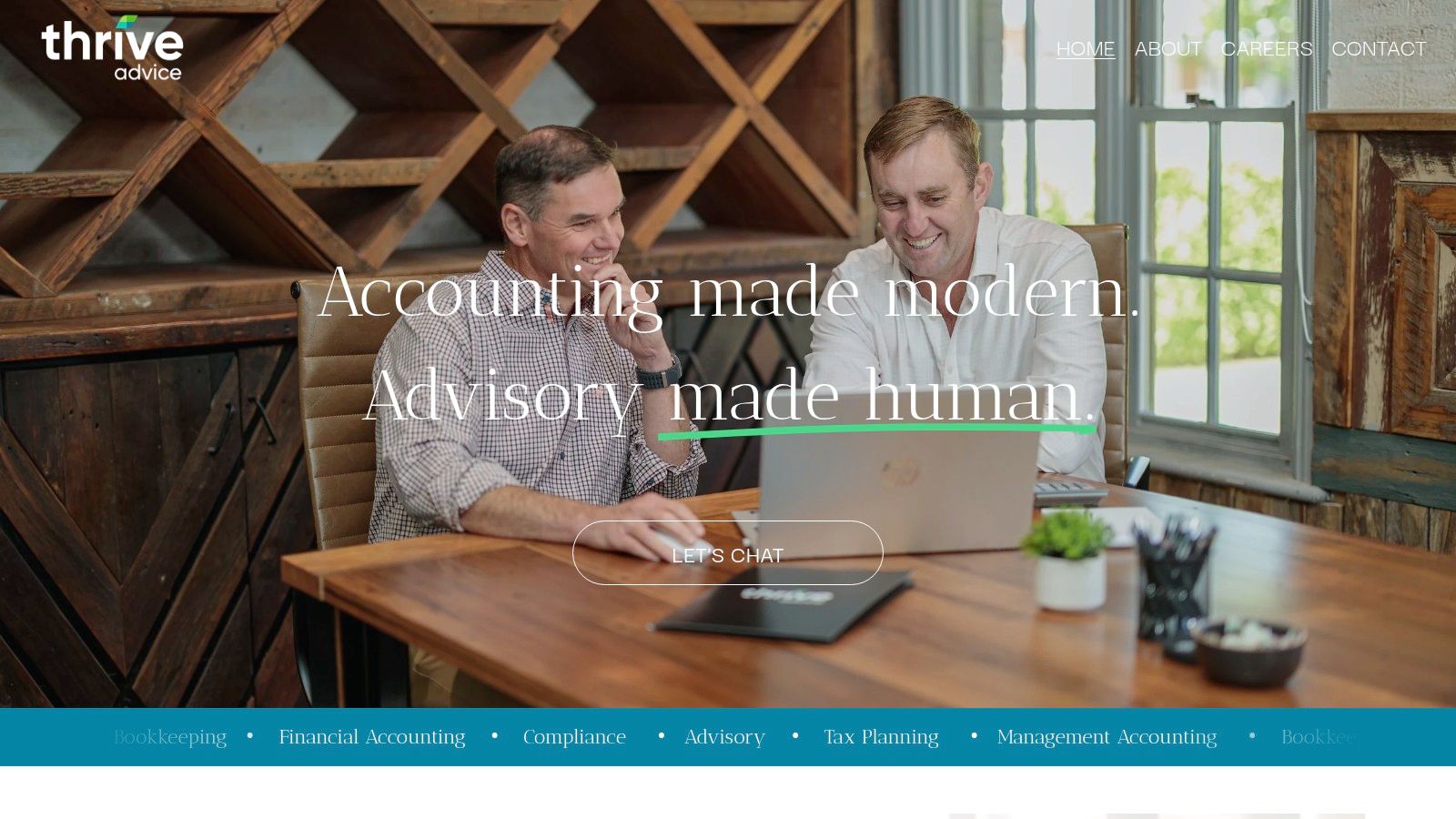
That approach is attractive for founders who are trying to keep finance ahead of growth. If you're pre-seed or seed, you often need a partner who can help you decide what to track, how to structure spend, and when to pull in deeper support for the R&D Tax Incentive. Thrive's local office at 5 New Street gives you the face-to-face access that many founders still want during early-stage decision-making.
The other advantage is partner visibility. Small teams often value direct access more than a sprawling service menu, because it shortens the feedback loop when something changes in the product roadmap or payroll. If you're trying to understand claim-readiness, ClaimKit's eligibility guide is a practical companion before any meeting with an adviser.
Strongest use case: founders who want planning, structure, and tax optimisation, not just compliance.
For scoping and workflow expectations, it also helps to review ClaimKit's R&D tax incentive overview. That gives you a clearer benchmark for what a startup-focused R&D process should cover.
Best fit: founders who want advisory access and a proactive conversation about tax.
Watch-outs: detailed service menus and pricing aren't public, and related-entity financial services should be checked carefully.
Website: Thrive Advice
5. MBC Group Services
MBC Group Services suits founders who want bookkeeping discipline before anything else. Its regional focus, especially across family businesses, trades, and small operators, points to a hands-on service style that can work well if your startup needs clean transaction coding, regular reconciliations, and steady compliance habits.
That matters because bookkeeping in a growing company is not just admin. Sloppy coding today becomes messy tax support later, and software-heavy startups feel that pain fast when they start preparing for the R&D Tax Incentive or trying to explain spend by project. In that setting, a firm that keeps the books tidy is useful, but only if it can also explain why the entries matter.
The Australian accounting-services market is large and competitive, with IBISWorld estimating the industry at $35.2bn in 2026. That usually creates fee pressure and process pressure for firms and clients alike. Read the market context in IBISWorld's accounting services overview.
The limit is clear. If your company is software-heavy, ask directly whether the firm can move past bookkeeping into entity structure, software spend categorisation, and claim support. Strong bookkeeping does not automatically mean R&D tax depth.
Best use case: founders who need disciplined bookkeeping aligned to tax outcomes.
If your books need to support a real claim, ClaimKit's help centre is the right place to compare what software-led evidence collection looks like before you sit down with an adviser.
Best fit: SMEs and founders who want ongoing operational support.
Watch-outs: advanced tax and advisory depth needs to be confirmed directly.
Website: MBC Group Services
6. Advance Accounting Group
Advance Accounting Group suits founders who want direct access to senior people without paying for a big-firm layer they do not need. Its Orange base at 24 McNamara St works for owners who still want to sit across the table from the person handling the work, especially when the finance questions are plain and speed matters more than process overhead.
The move from ACE Accounting Services points to continuity, not a hard break. That matters if you value local familiarity and a practice that already knows the region. For many Orange startups, that is enough in the early stages, especially when the work is BAS, tax, and basic business advisory rather than a full R&D documentation program.
A smaller practice can be a sensible fit while your team is still making straightforward decisions, but do not assume it can handle more technical claims without pressure. ClaimKit's guide to franking account debits and credits is a useful reminder that startup tax work often becomes more technical faster than founders expect.
Best fit: early-stage businesses needing personalised compliance and planning.
Orange has a real base of households and businesses, and the local market stays active enough to support relationship-driven professional services. Regional demand does not remove the need to test capability. It just means you have more reason to choose a firm that can stay close to the numbers and answer questions quickly.
Best fit: founders who want a boutique accountant for routine tax cycles.
Watch-outs: specialist advisory depth and pricing are not clearly published online.
Website: Advance Accounting Group
7. Prime Partners Orange office
Prime Partners is the strongest option on this list for founders who already know they need R&D claim support, business structuring, and a more scalable advisory setup. The Orange office gives you local delivery, while the broader North Sydney back-end gives the firm access to a deeper bench than most regional boutiques can offer.
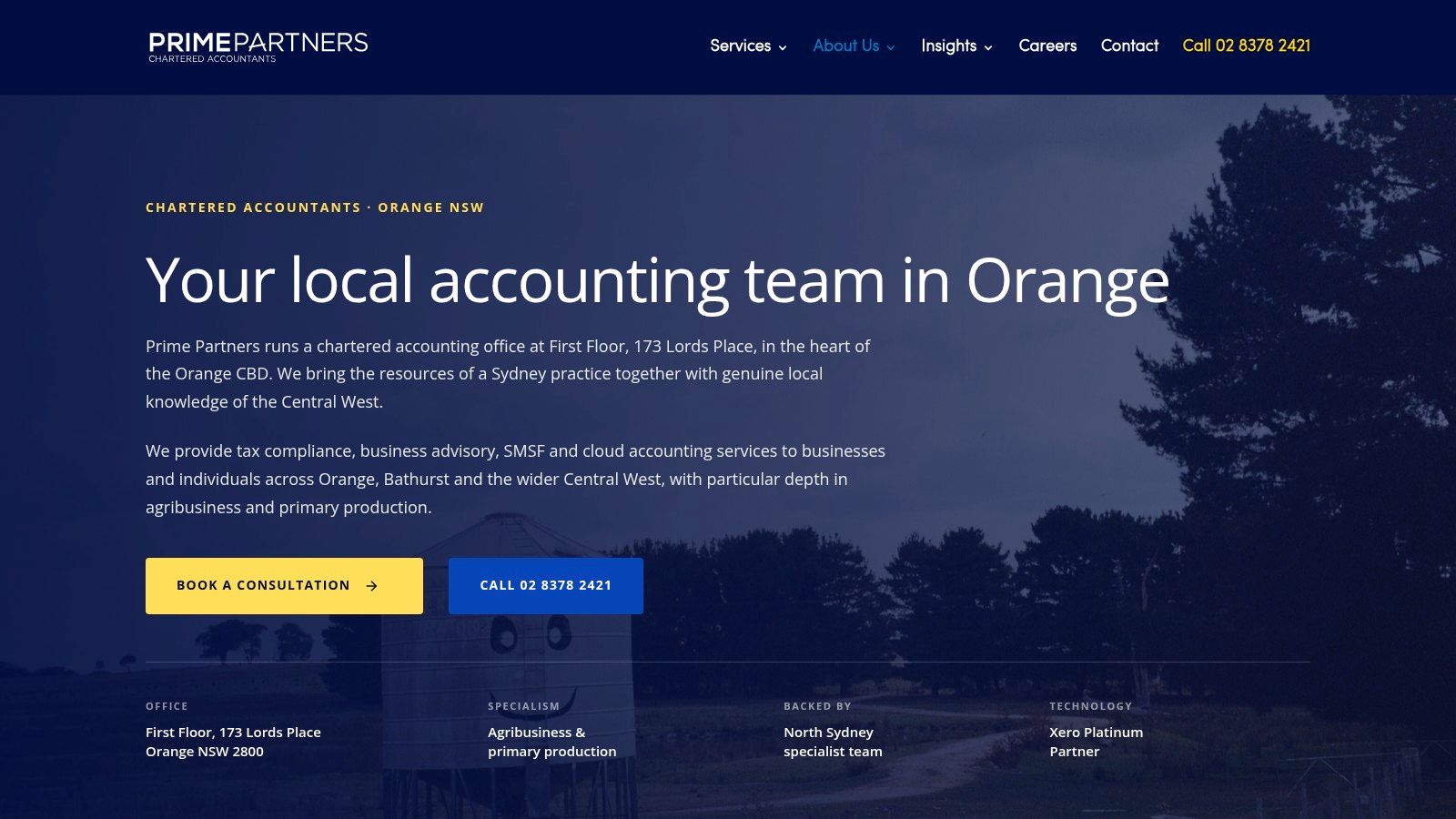
That matters for software companies. Once you're preparing R&D claims, the work is no longer just about coding up expenses correctly. You need evidence from engineering, product, and finance, plus a clean workflow that can support the technical narrative and the financial schedules before lodgement. Prime Partners' stated experience with R&D Tax Incentive claims makes it more relevant than a generic local practice for this use case.
For a startup, virtual CFO support is also valuable because it helps connect claim timing to board reporting, runway planning, and funding conversations. If you're thinking about Orange accountants only as a local convenience, you'll miss that the best match may be the one that understands both the regional base and the metro-level specialist work.
Best fit: software and R&D-heavy companies that want coordinated tax and claim support.
The market context is important too. New South Wales holds the highest state share of accountants in the national occupation profile, and the state's accounting business base is substantial, which helps explain why specialist firms can support Orange clients without forcing them into a purely local-only service model. See the Jobs and Skills occupation profile for Accountants.
Best fit: scaling startups that want R&D support without sacrificing strategic advisory.
Watch-outs: fee levels may sit above micro-boutiques, and Orange-specific case studies are limited online.
Website: Prime Partners Orange office
Comparison of 7 Accountants in Orange, NSW
| Firm | Implementation complexity 🔄 | Resource requirements ⚡ | Expected outcomes ⭐📊 | Ideal use cases | Key advantages 💡 |
|---|---|---|---|---|---|
| pmwPlus | 🔄 Medium, integrated, multi-discipline onboarding | ⚡ Moderate–High, cross-specialist capacity | ⭐⭐⭐⭐, comprehensive end‑to‑end accounting & advisory | SMEs seeking a single local provider for tax, bookkeeping & planning | Broad specialist bench; long regional presence |
| YBM (Yates Baker McLean) | 🔄 Medium, multidisciplinary processes and continuity | ⚡ Moderate, in‑house planners, advisers & bookkeepers | ⭐⭐⭐⭐, stable compliance + growth support | New businesses and SMEs needing continuity and practical setup tools | Deep local roots; multi‑disciplinary team |
| Madden Partners | 🔄 Medium–High, includes audit and assurance workflows | ⚡ Moderate, audit capability and partner access | ⭐⭐⭐⭐, reliable audit, tax and scaling support | Startups and scaling businesses requiring statutory audits | In‑house audit capability; direct partner engagement |
| Thrive Advice | 🔄 Low–Medium, advisory‑led, partner access | ⚡ Moderate, partner‑led planning and CFO‑style support | ⭐⭐⭐⭐, proactive tax optimisation and structure planning | Founders seeking strategic planning and tax efficiency | Partner‑led advisory; proactive planning focus |
| MBC Group Services | 🔄 Low, practical, ongoing bookkeeping focus | ⚡ Low–Moderate, bookkeeping and compliance resources | ⭐⭐⭐, consistent bookkeeping aligned to tax outcomes | Farmers, trades and small SMEs wanting tight bookkeeping | Strong regional/agribusiness knowledge; practical service |
| Advance Accounting Group | 🔄 Low, boutique, direct engagement | ⚡ Low, small team, personalised service | ⭐⭐⭐, dependable tax, BAS and small business support | Simple SME tax cycles and face‑to‑face clients | Senior access; personalised local service |
| Prime Partners (Orange) | 🔄 High, coordination with metro specialists and R&D claims | ⚡ High, specialist tax, R&D and virtual CFO resources | ⭐⭐⭐⭐, specialist structuring, R&D claim and CFO outcomes | Tech/R&D‑intensive companies and startups needing claims & structure | Metro‑scale specialist bench; R&D and virtual CFO expertise |
Buying Guide Choosing Your R&D Tax Advisor
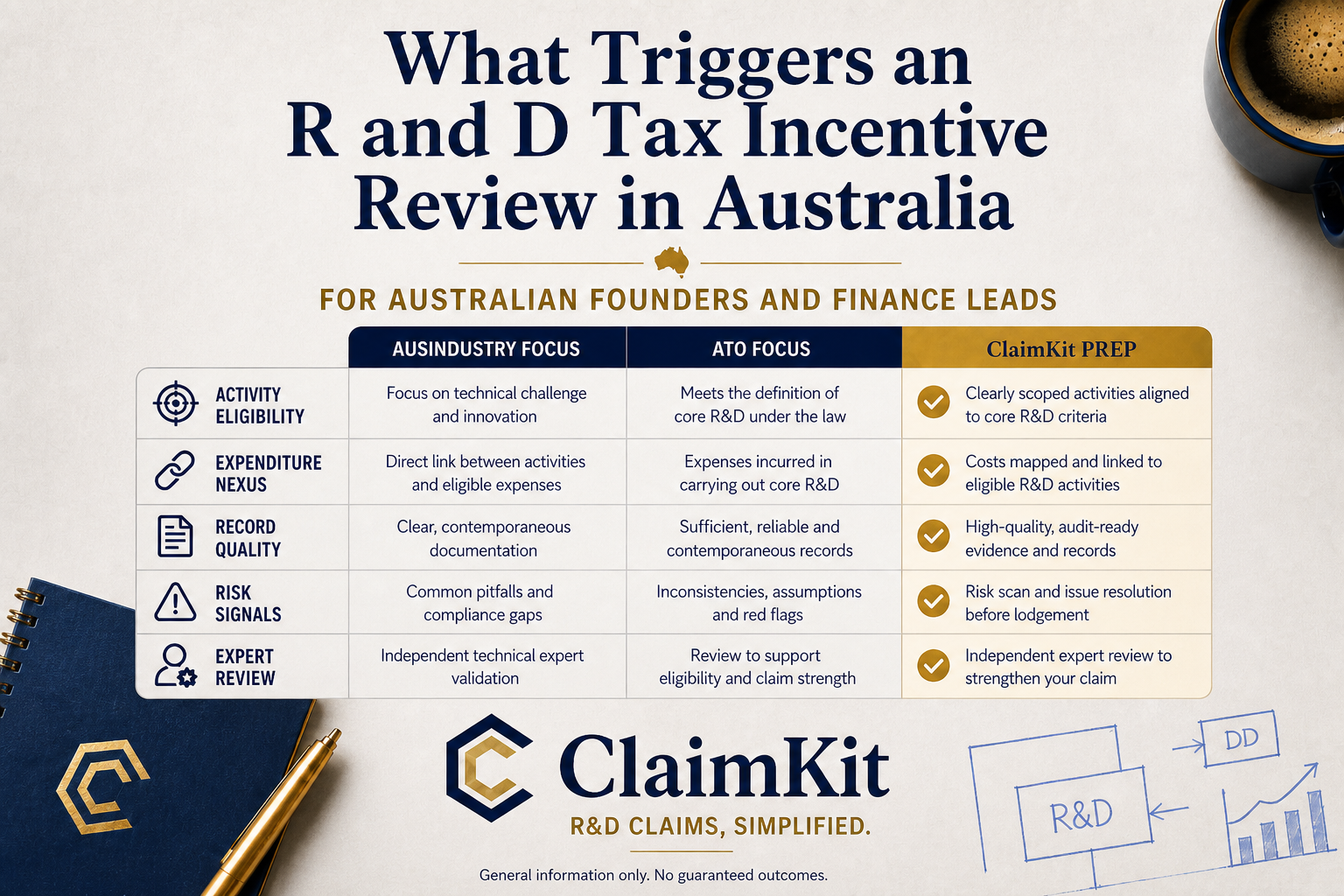
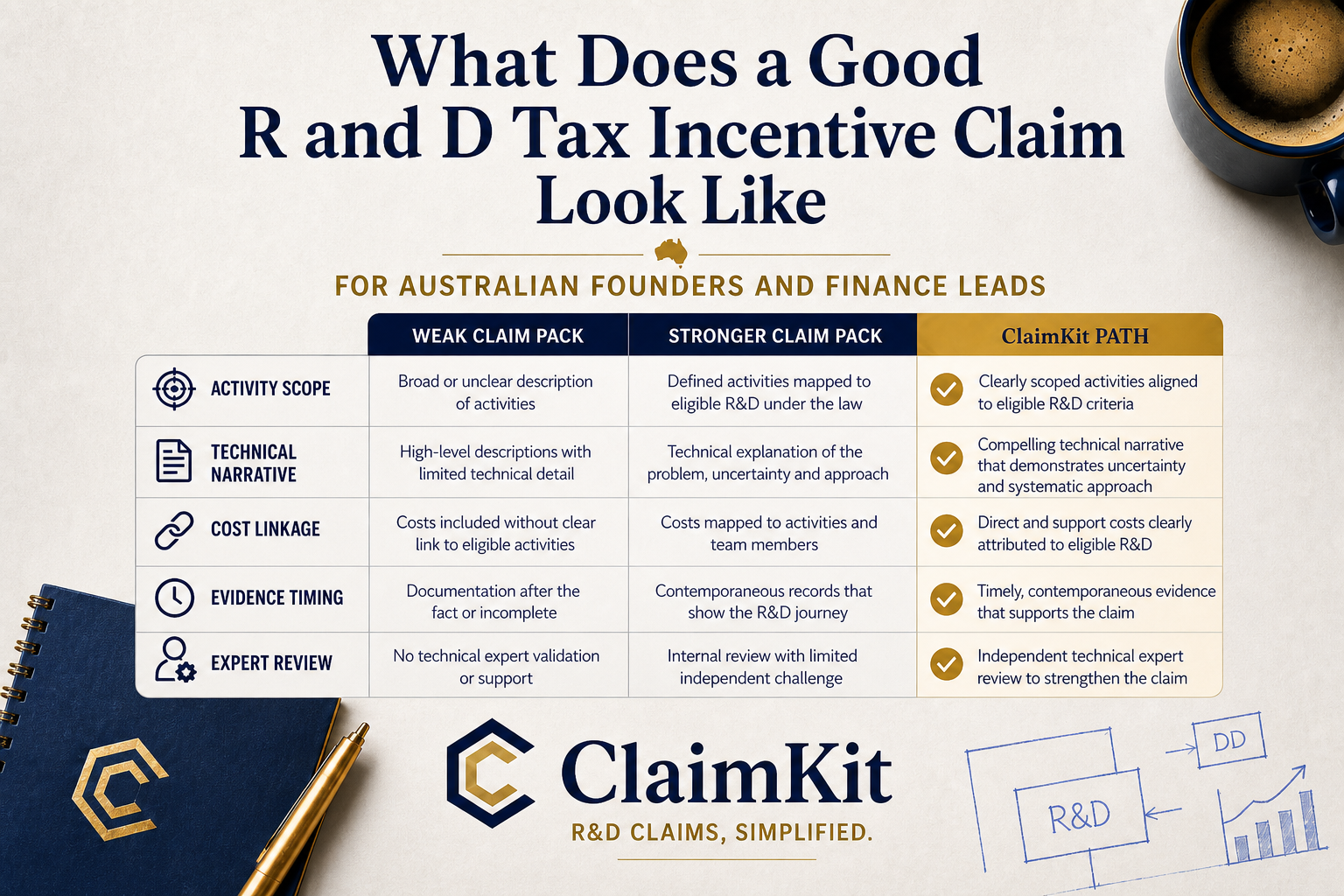
A local Orange accountant is the right starting point for compliance, but the R&D Tax Incentive needs more than tidy bookkeeping. If your claim is software-led, your adviser has to understand technical work, contemporaneous records, cost tracing, and how to turn engineering activity into an ATO-ready package, not just a set of accounts. The official program overview on business.gov.au is the baseline every founder should read before relying on any adviser.
For many startups, the choice is between three models. A local generalist is best for straightforward tax and BAS work. A specialist firm like Treadstone or Link R&D Advisory is better when the claim itself is the main event. A platform such as ClaimKit sits in the middle, using AI to draft claims from data in tools like GitHub or Jira, then having experts review the work before ATO lodgement. That model can suit founders who want speed, visibility, and less manual back-and-forth, especially when the team is already using product and engineering systems as part of daily work.
The right decision depends on stage and complexity. If you're pre-seed with one product stream and limited documentation, start with a clean evidence process and a firm that will keep you organised. If you're Series A or building multiple eligible projects, choose an adviser who can coordinate finance and technical evidence without turning your team into a paperwork machine. If your existing Orange accountant is solid but doesn't do R&D claims well, keep them for compliance and use a specialist workflow for the incentive itself.
Practical move this week: pull your last quarter of GitHub, Jira, Linear, Notion, and Xero data together, then ask any accountant whether they can turn that into a claim workflow before EOFY pressure hits.
If you're comparing options, use ClaimKit's blog alongside your accountant shortlist and keep ClaimKit's about page open when you want to see how the platform approach fits a startup finance stack. For a working founder, the best advisor is the one who can keep the claim moving without creating another admin job.
If your startup is in Orange and you want an R&D claim process that starts from the tools your team already uses, visit ClaimKit and see how AI-drafted claims with expert review can fit alongside your accountant. It's a practical option for founders who need evidence gathering, technical narrative drafting, and lodgement support without dragging engineering back into spreadsheets.
Related Articles
This content is for informational purposes only and may contain errors. Please contact us to verify important details.